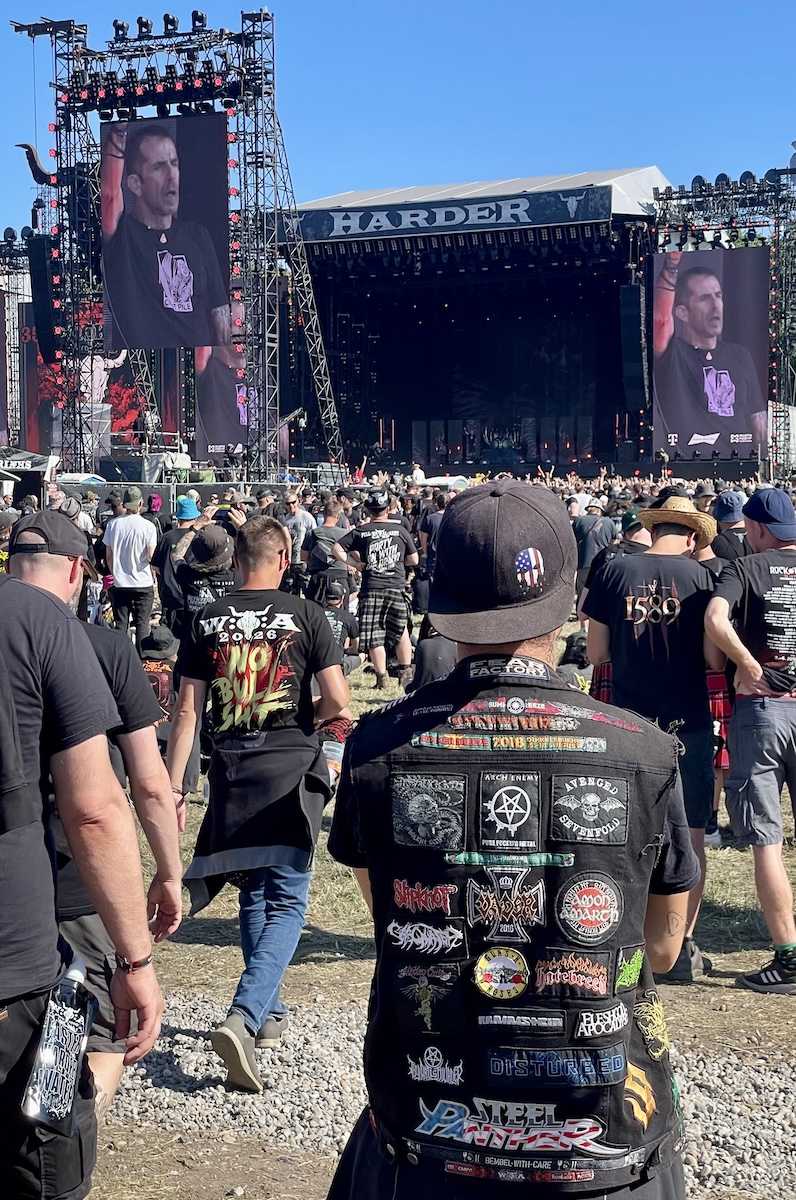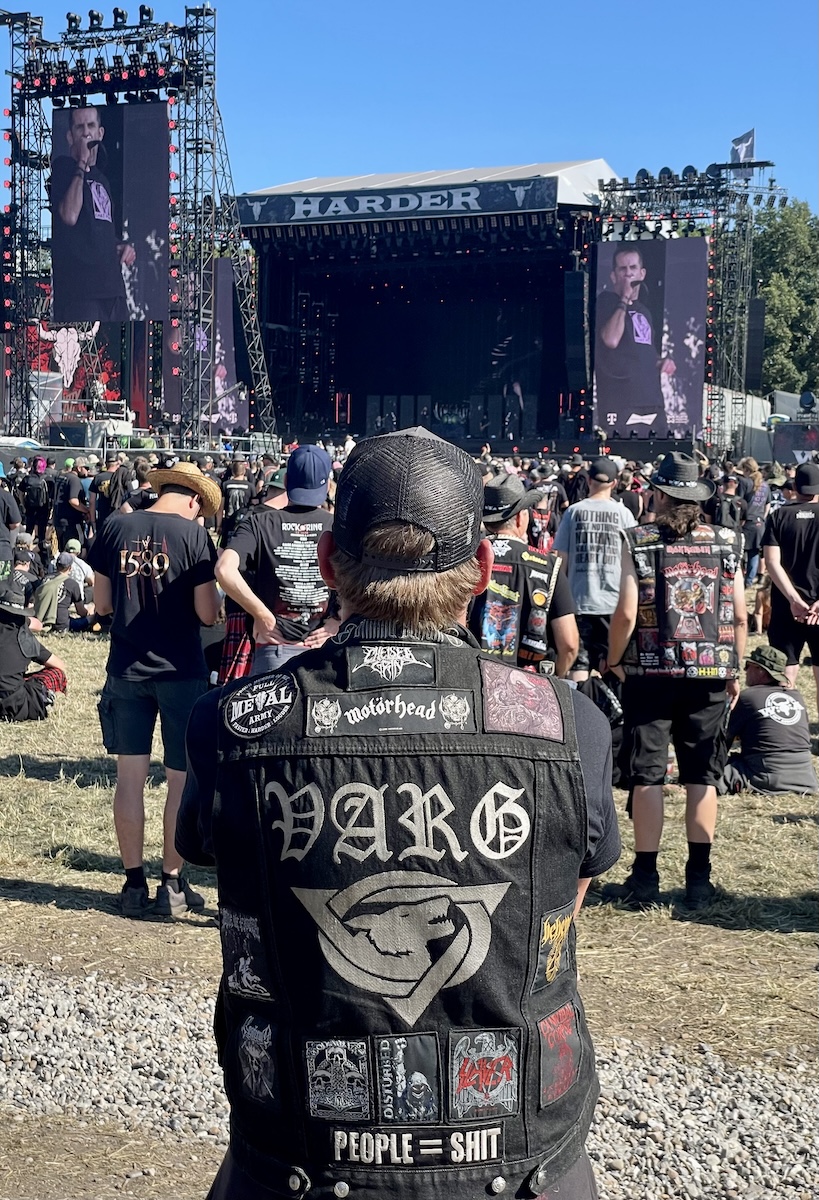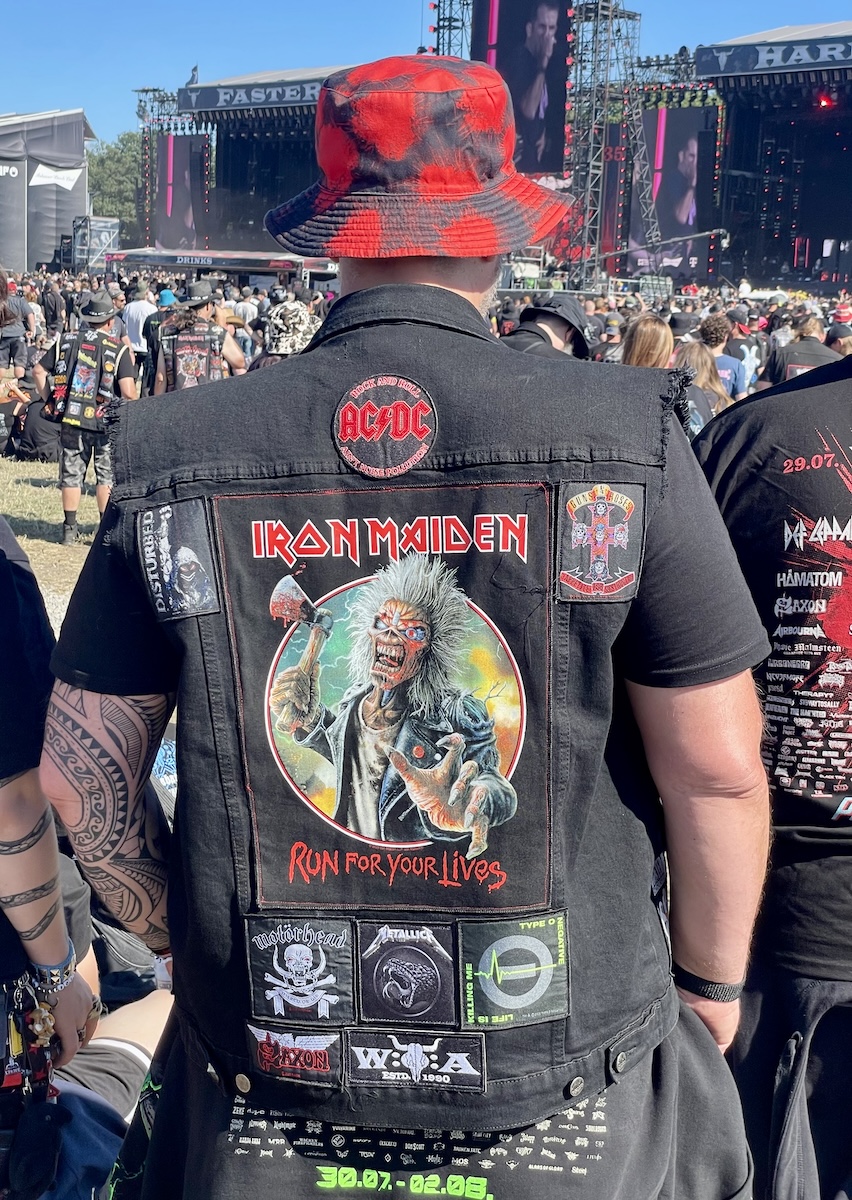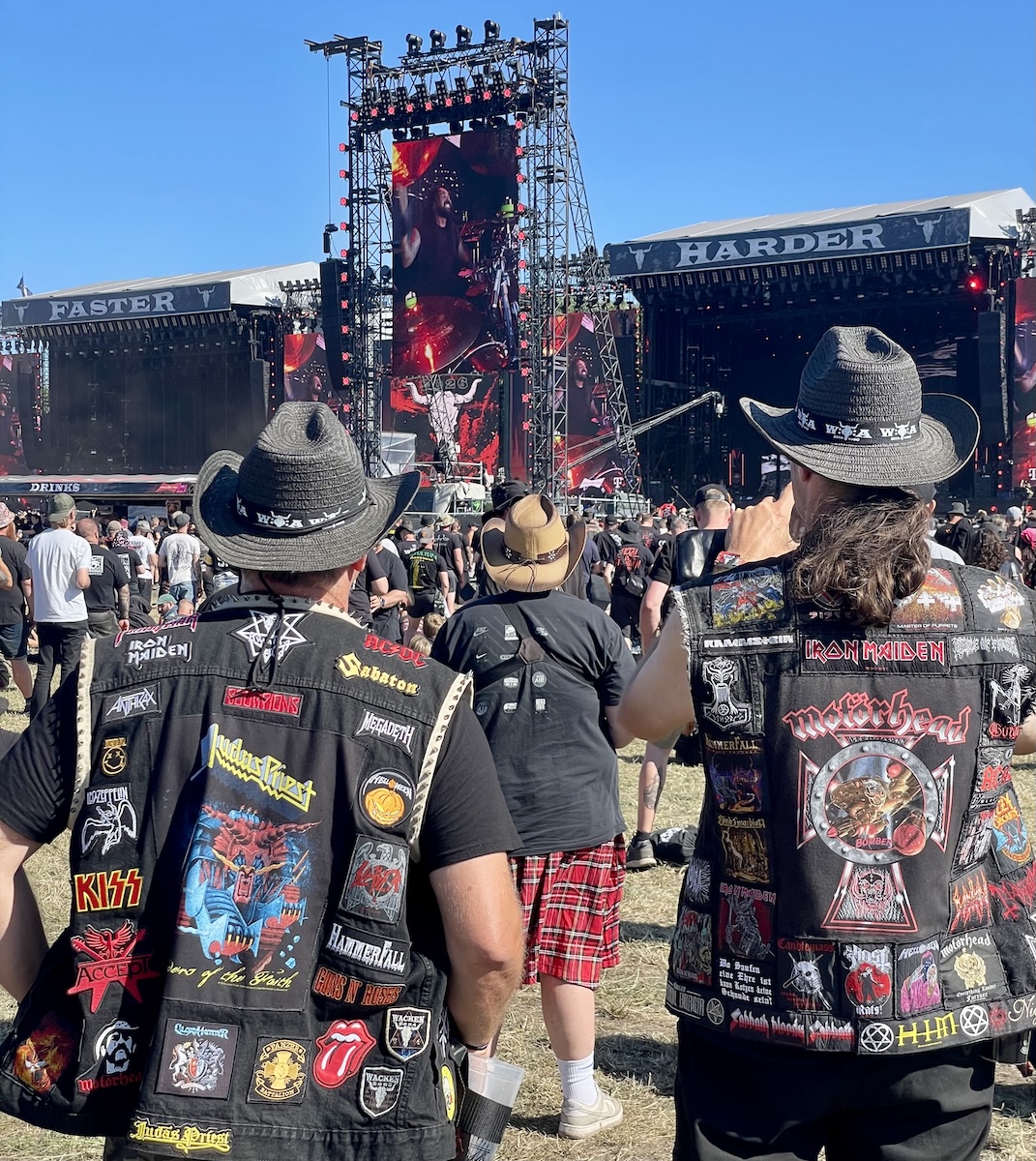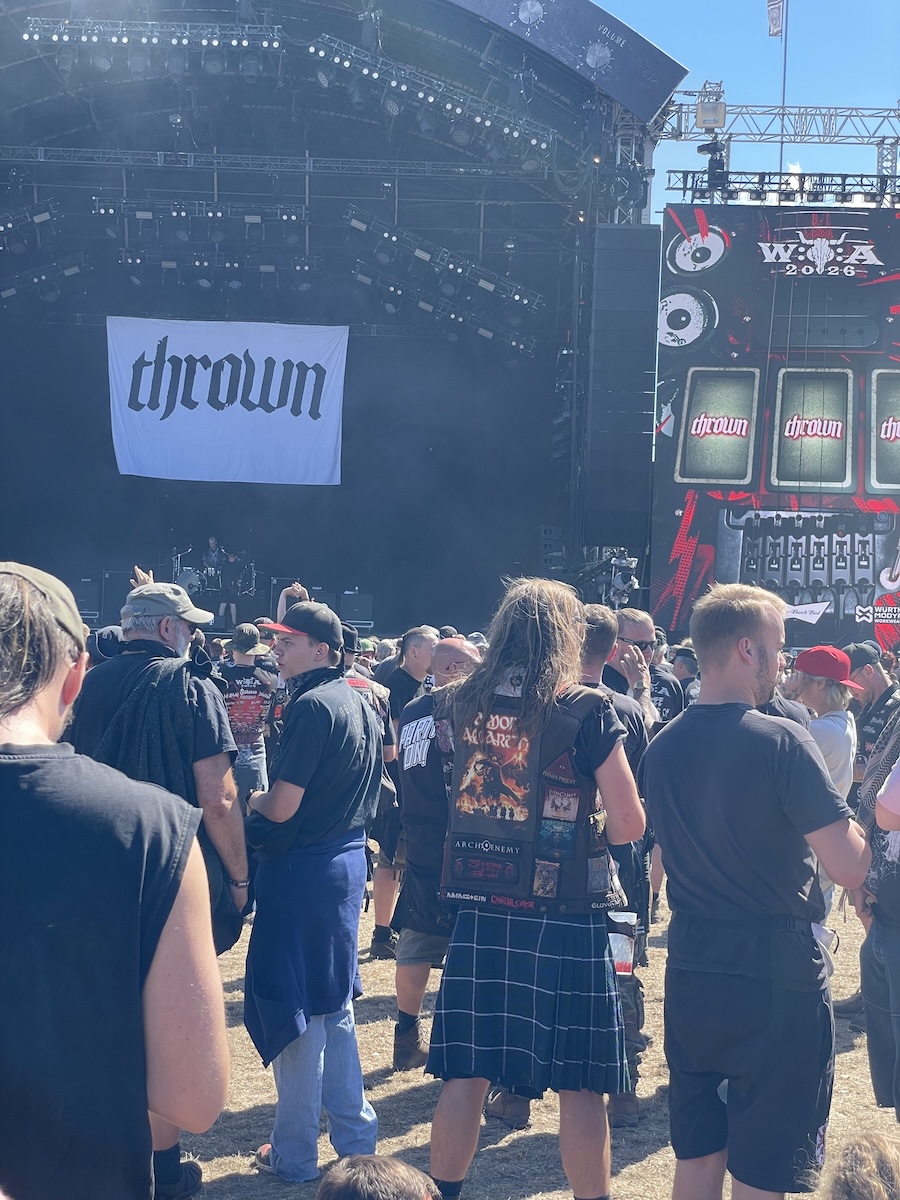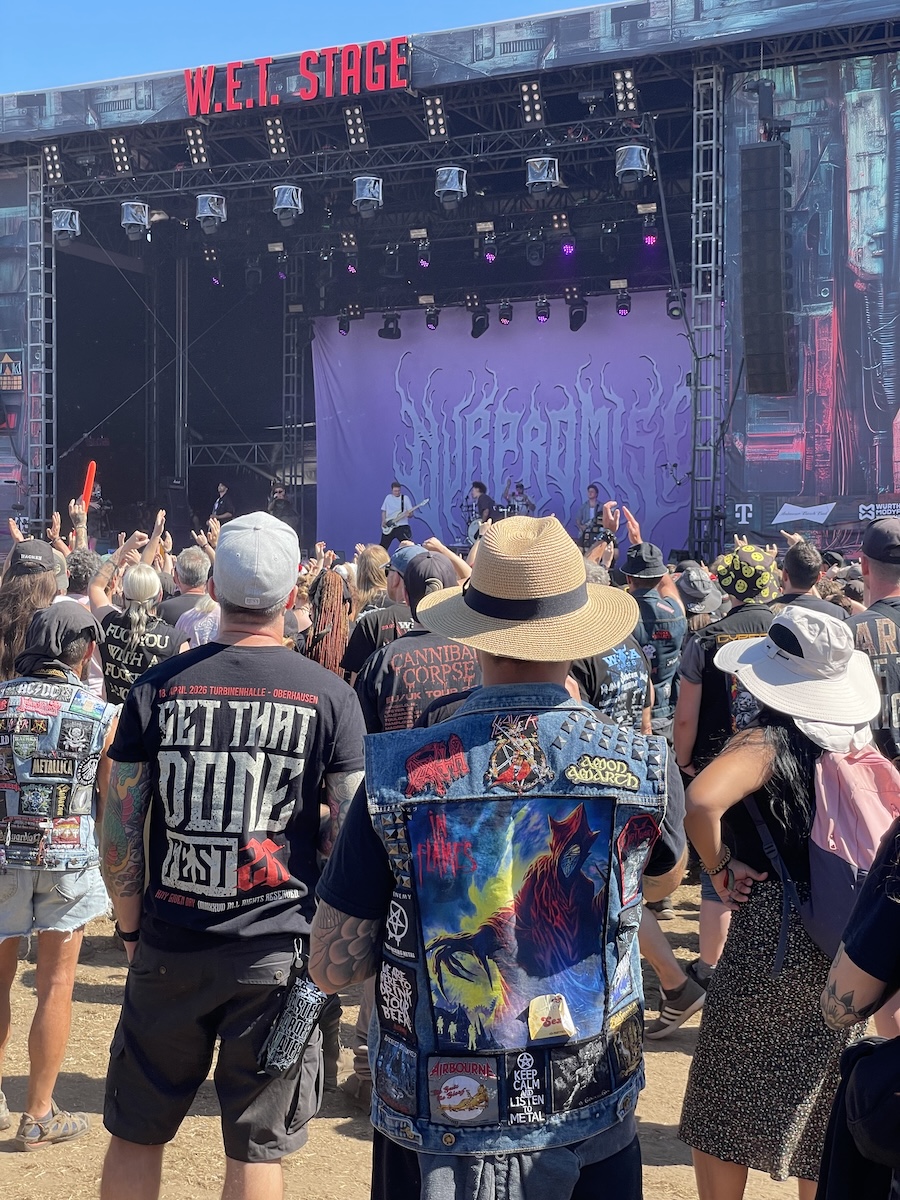
I attended Wacken Open Air 2026 in late July and Early August.
I am not a metalhead.
That’s a contradiction.
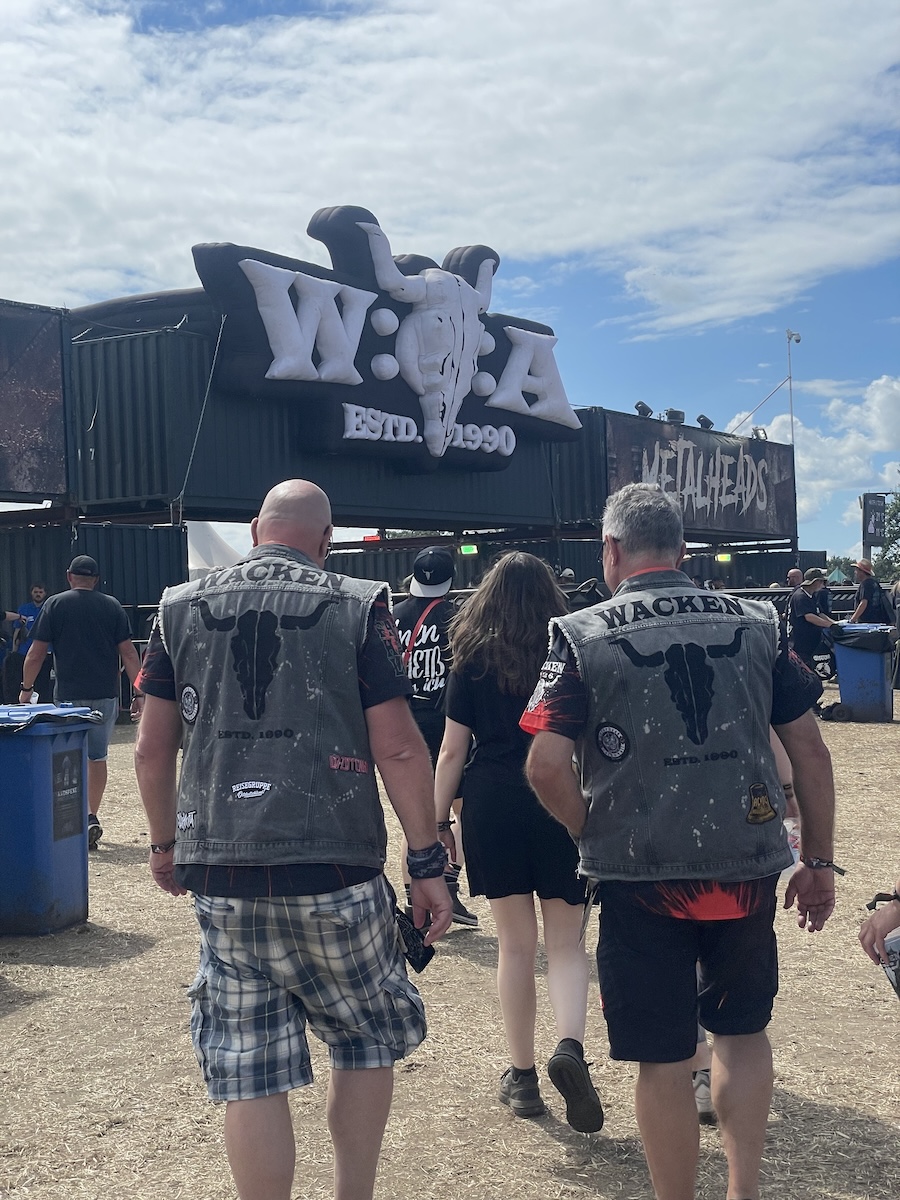
Wacken is, in essence, Coachella for metalheads. It’s been going on since 1990. Eight stages, including “Faster” and “Harder,” which are stadium-class behemoths immediately adjacent to one another, so setups can happen as the previous band still plays, yielding mere 15-minute gaps between performances. Alpine, an earplug maker, is a sponsor.
I went to Wacken (pronounced “vacken,” though I prefer the anglicized “whacken”) because my old friend and onetime host brother Frederic invited me, his godson Felix, and the son of an old friend of his, Artur, to the entire thing, glamping in “Residenz Evil” included. This put us among the select few among the roughly 85,000 metalheads in attendance, many of whom camped a mile or more away in the hayfields northeast of Hamburg, Germany.
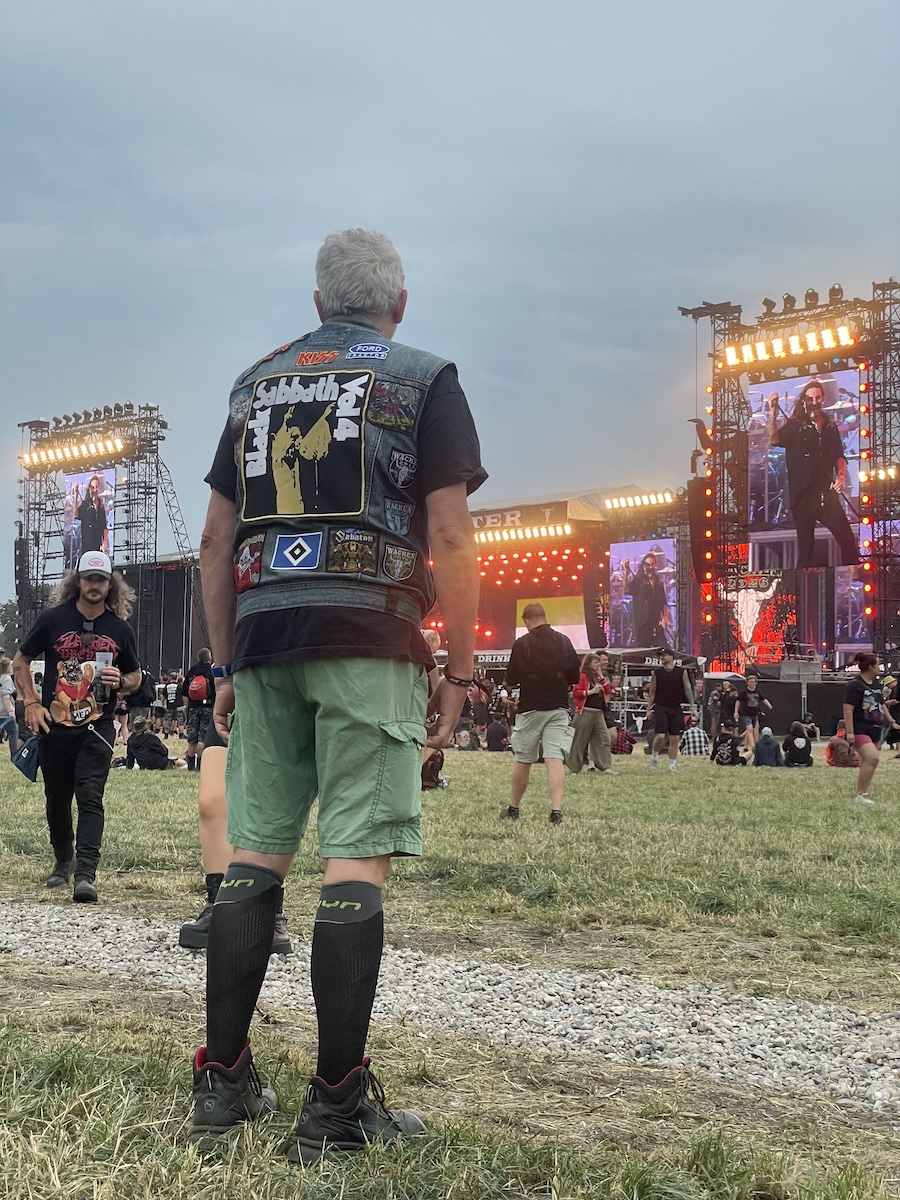
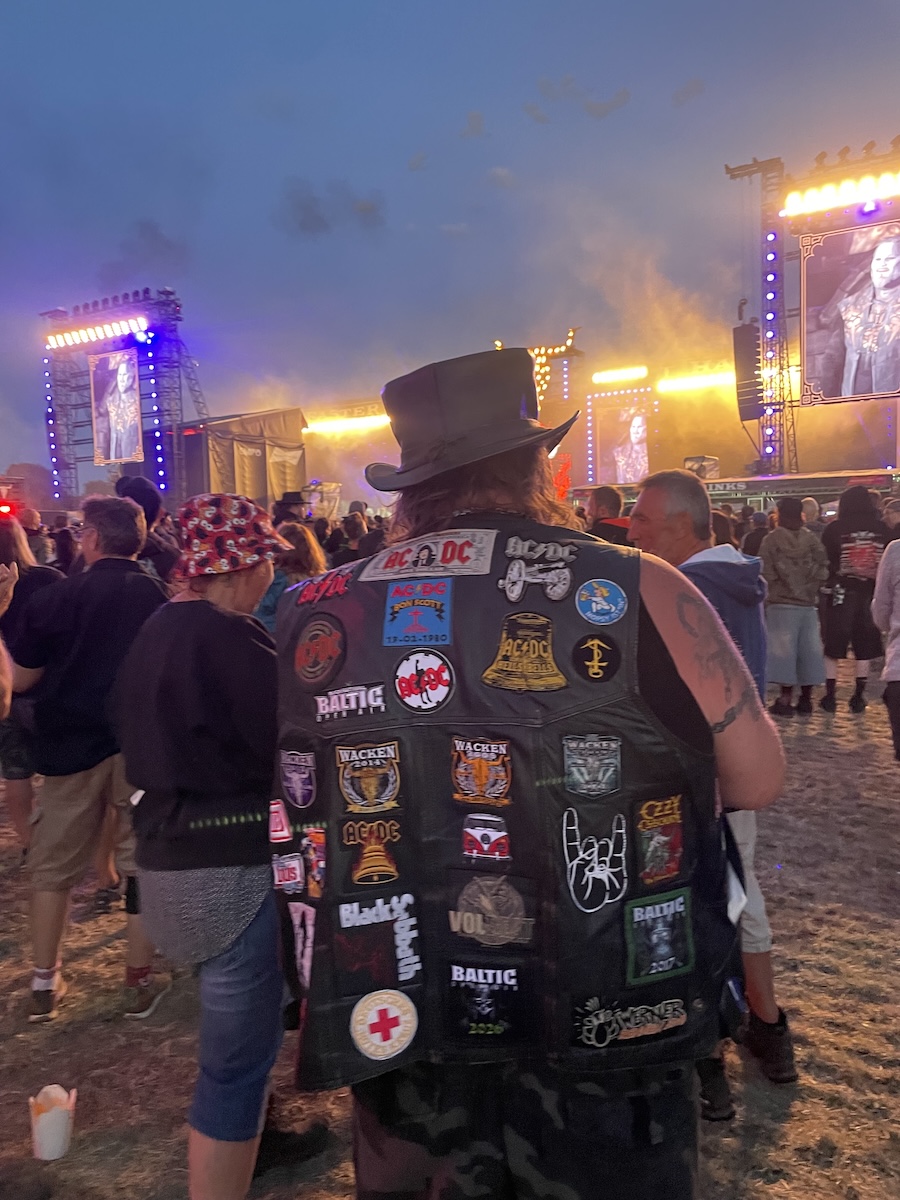
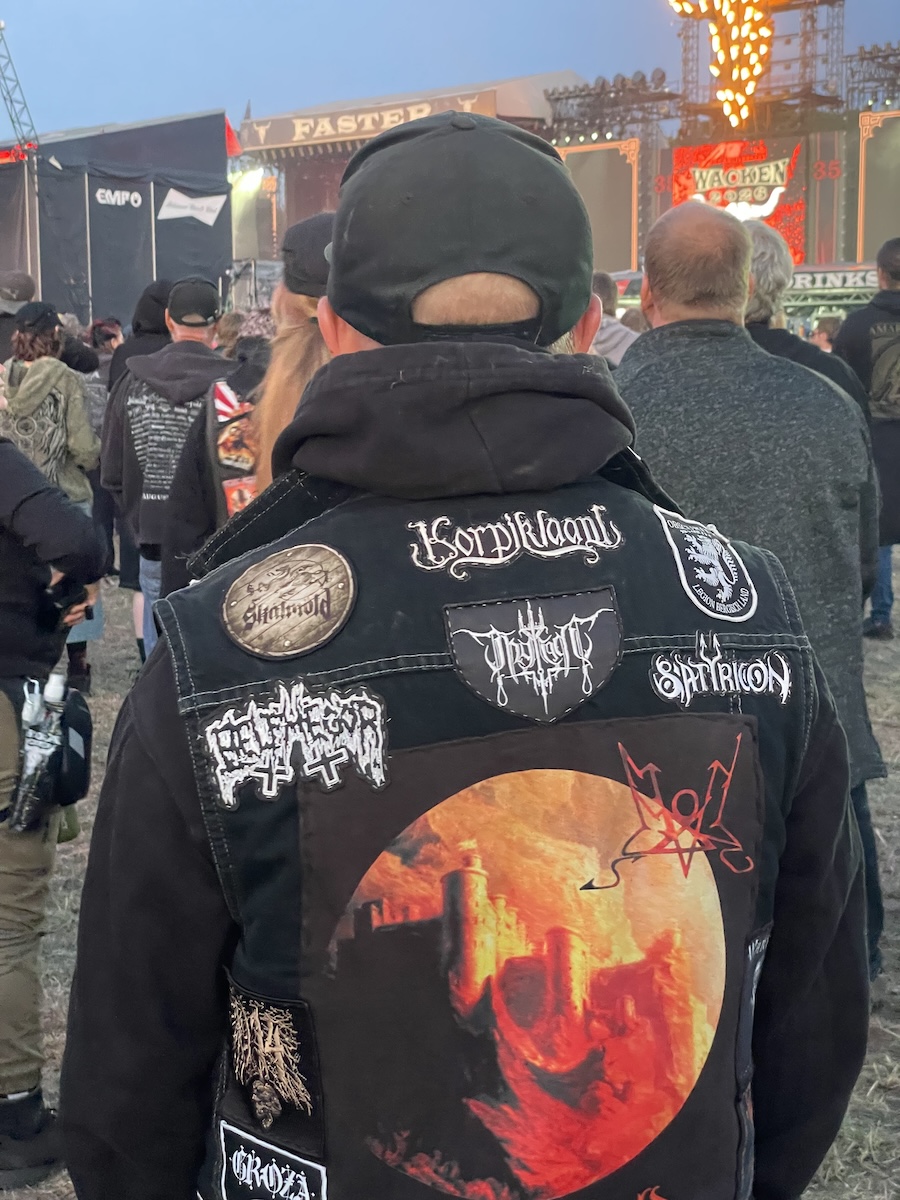
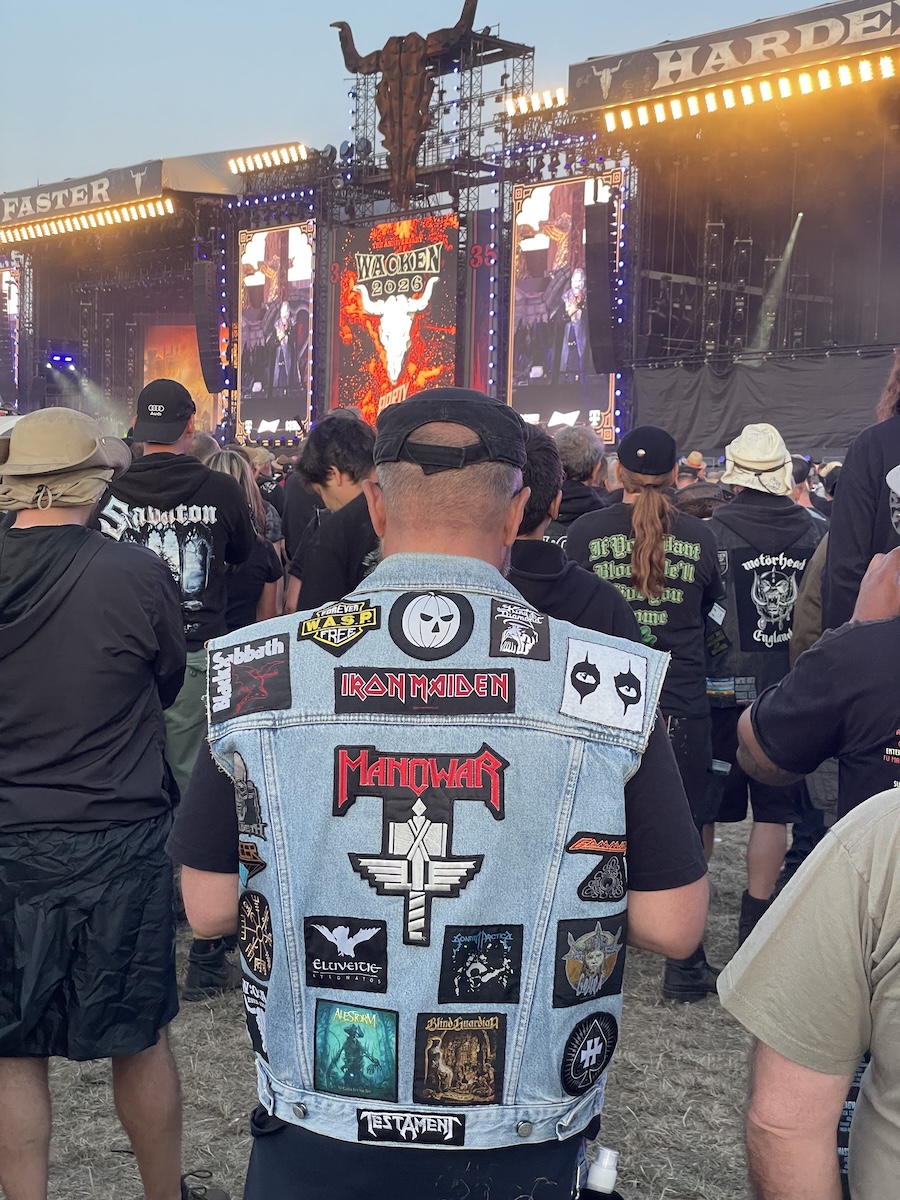
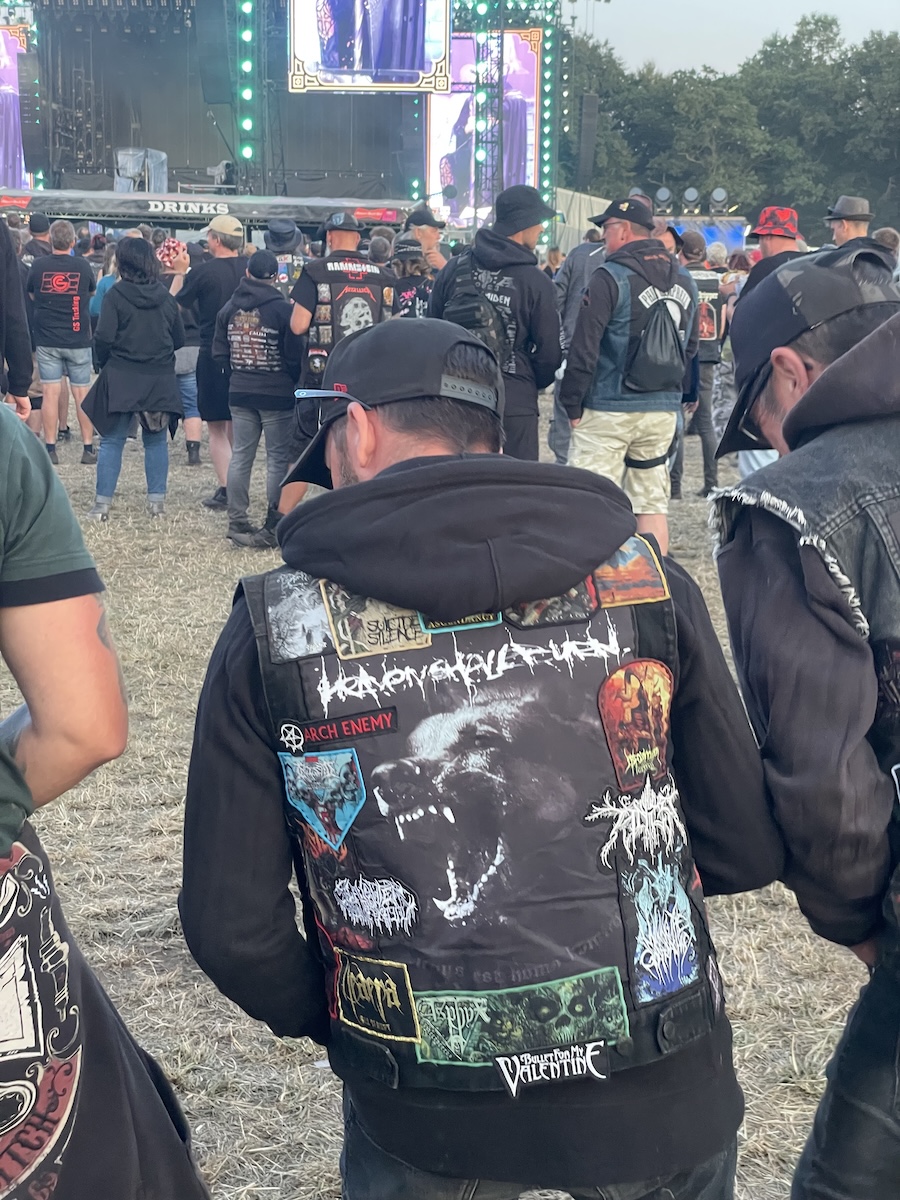
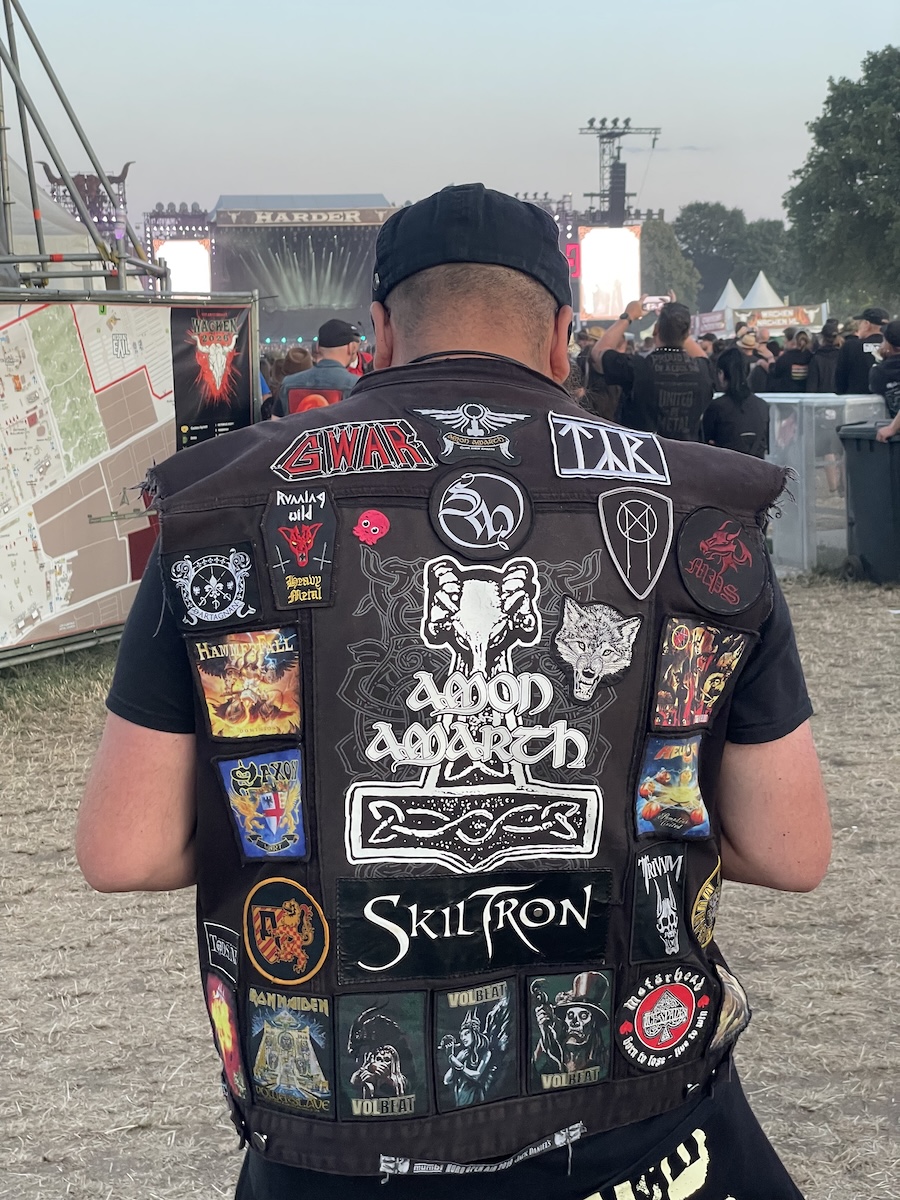
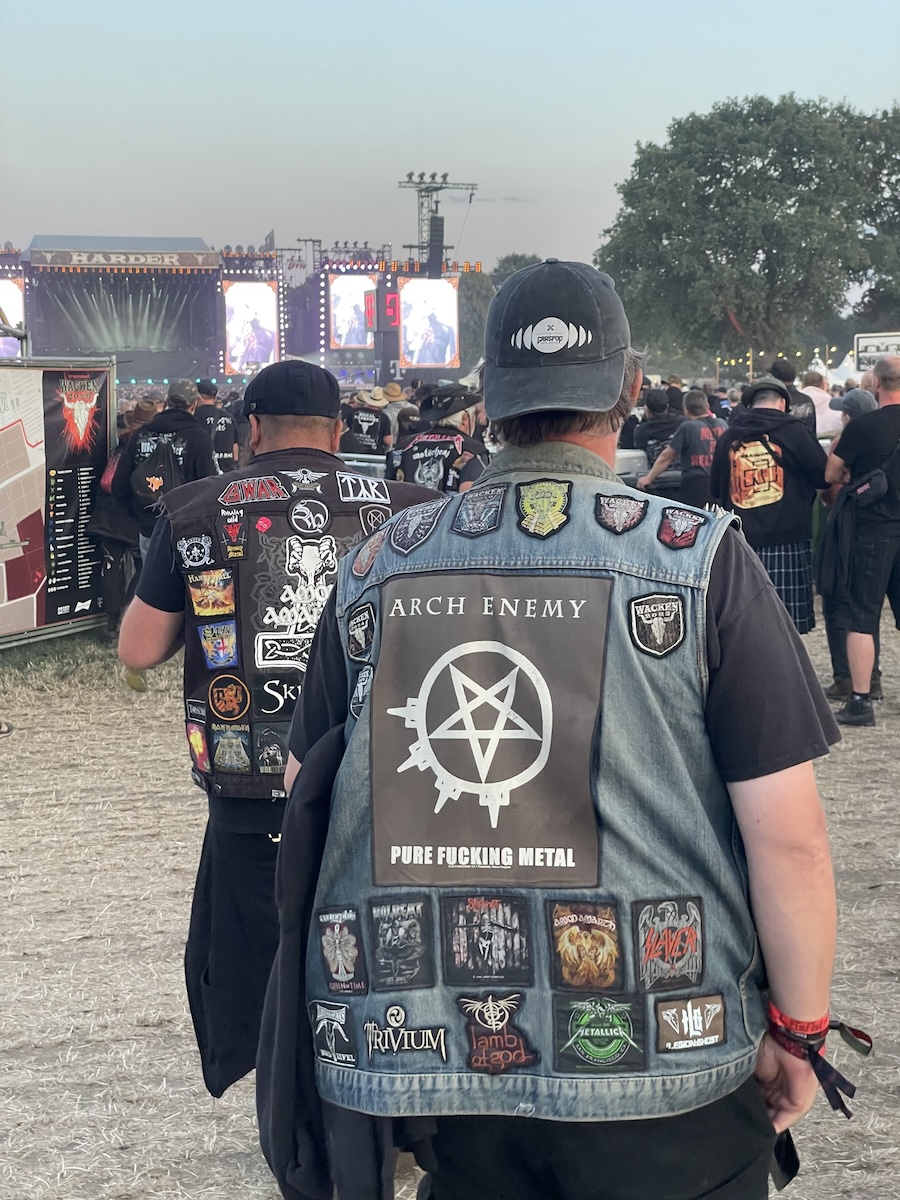
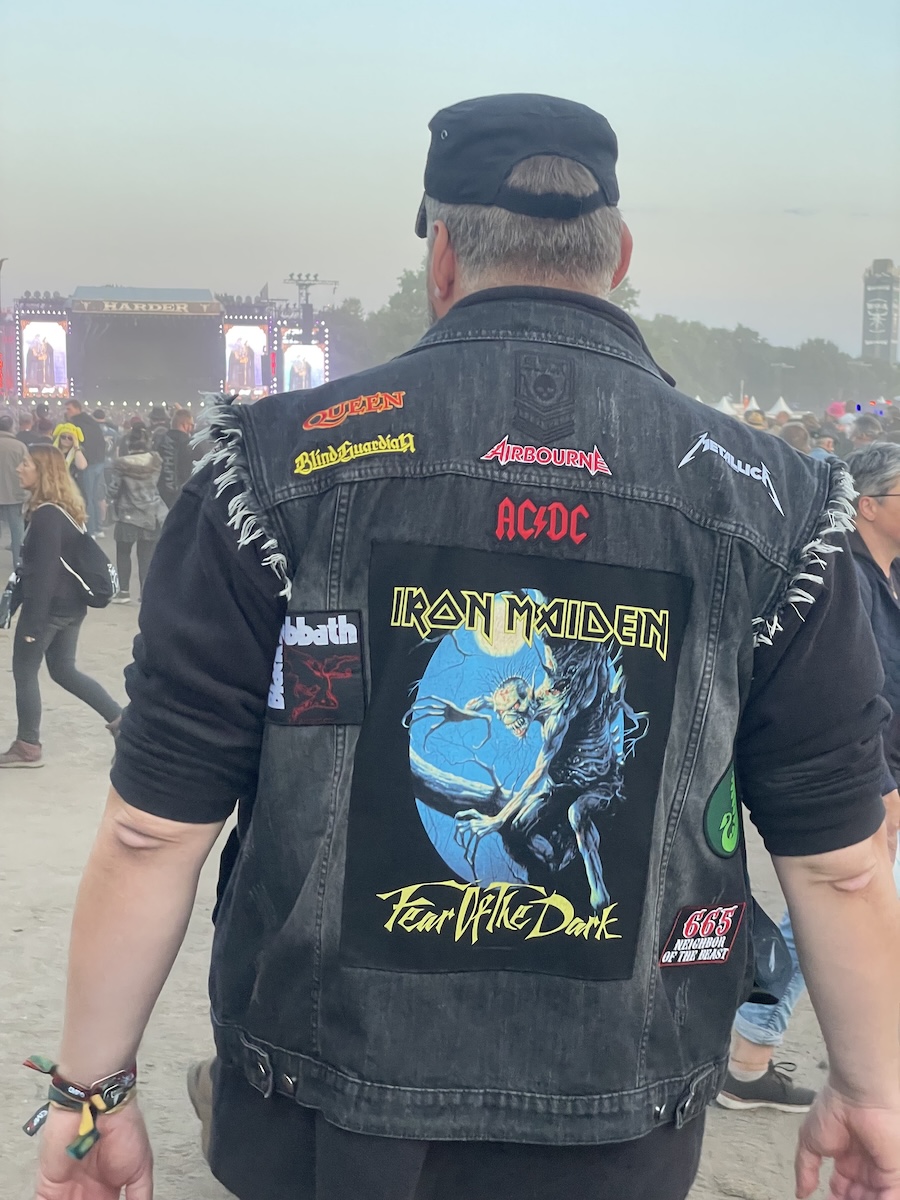
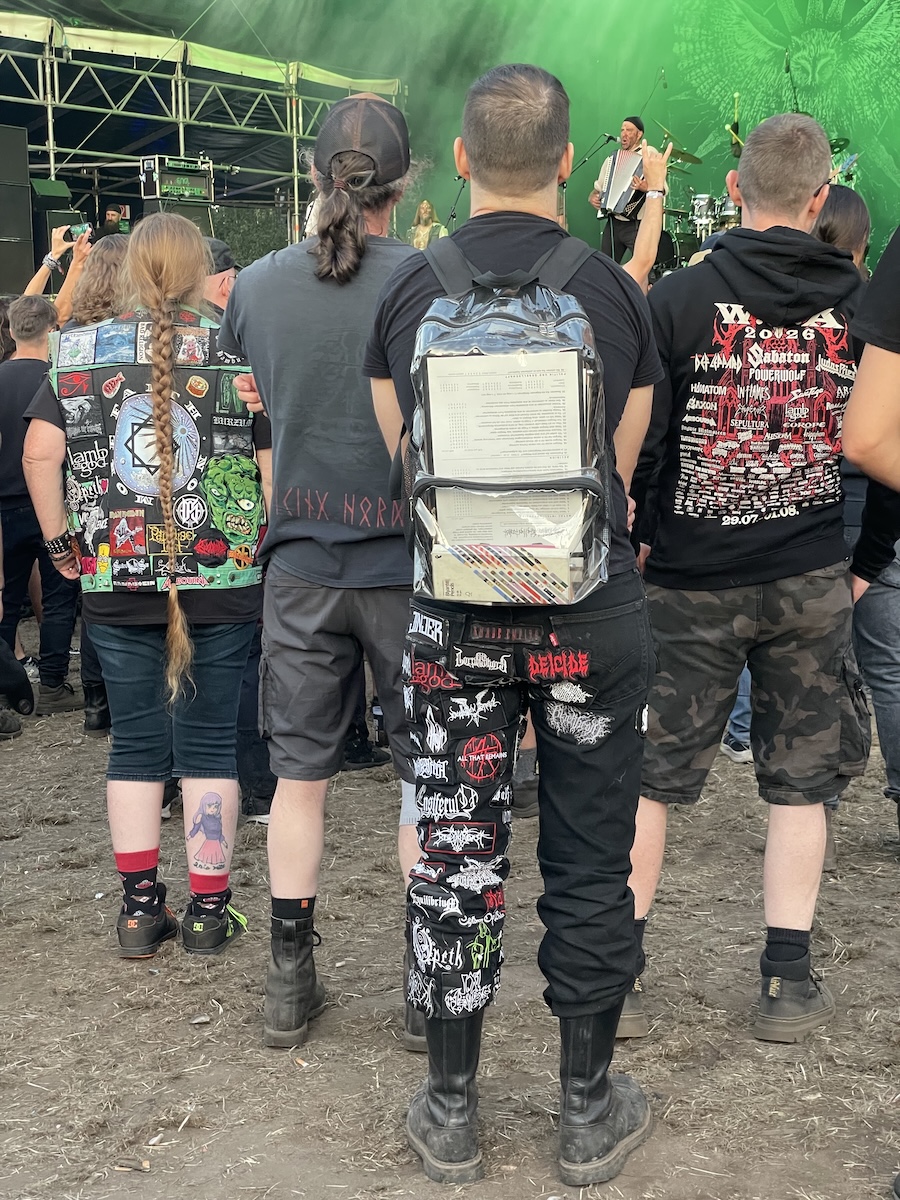
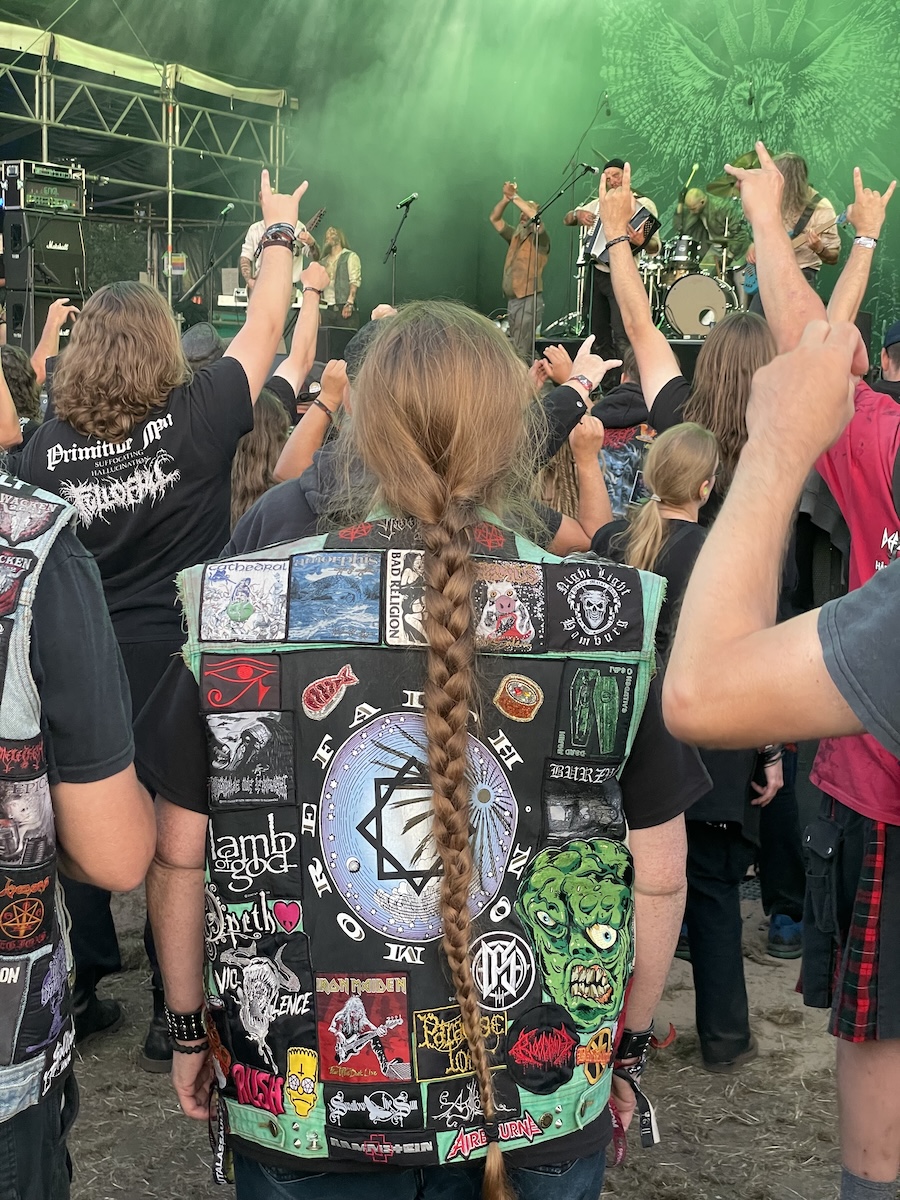
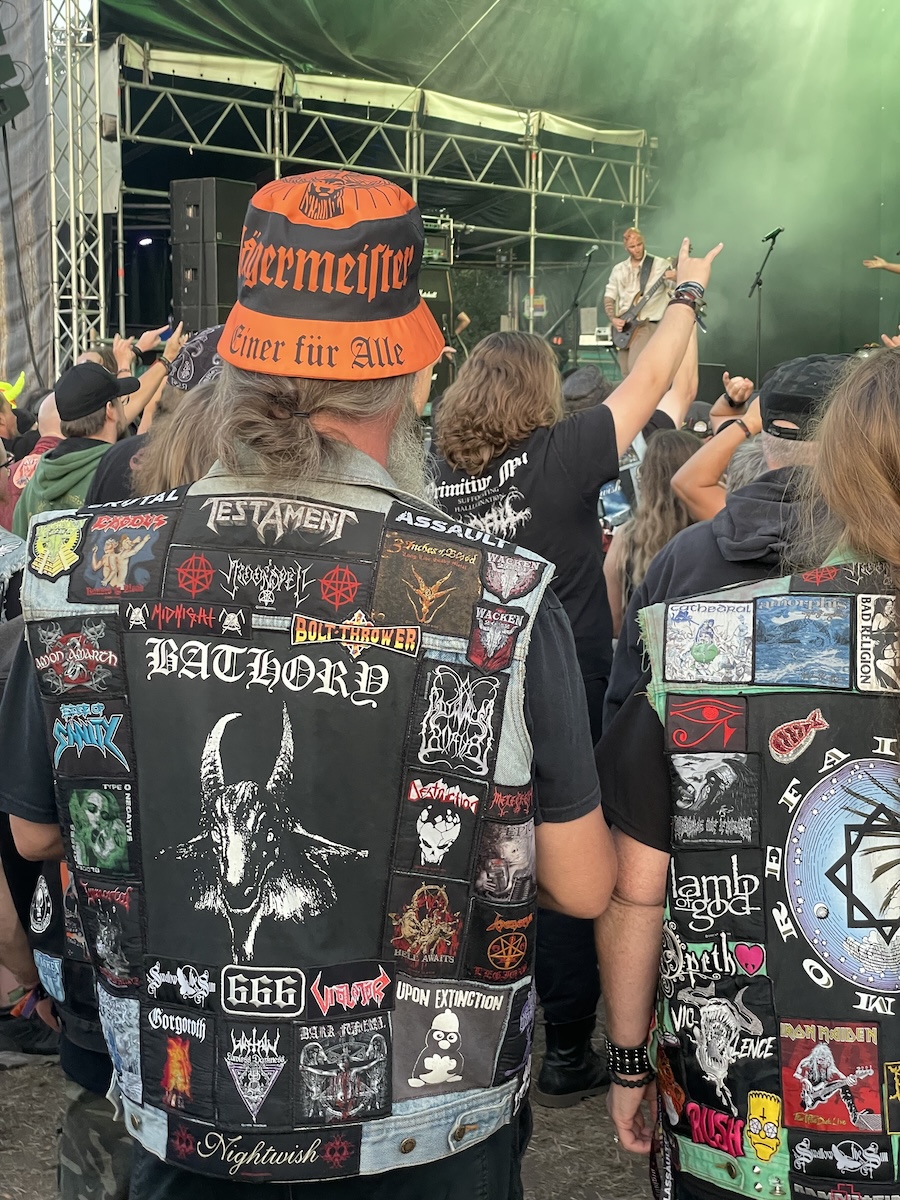
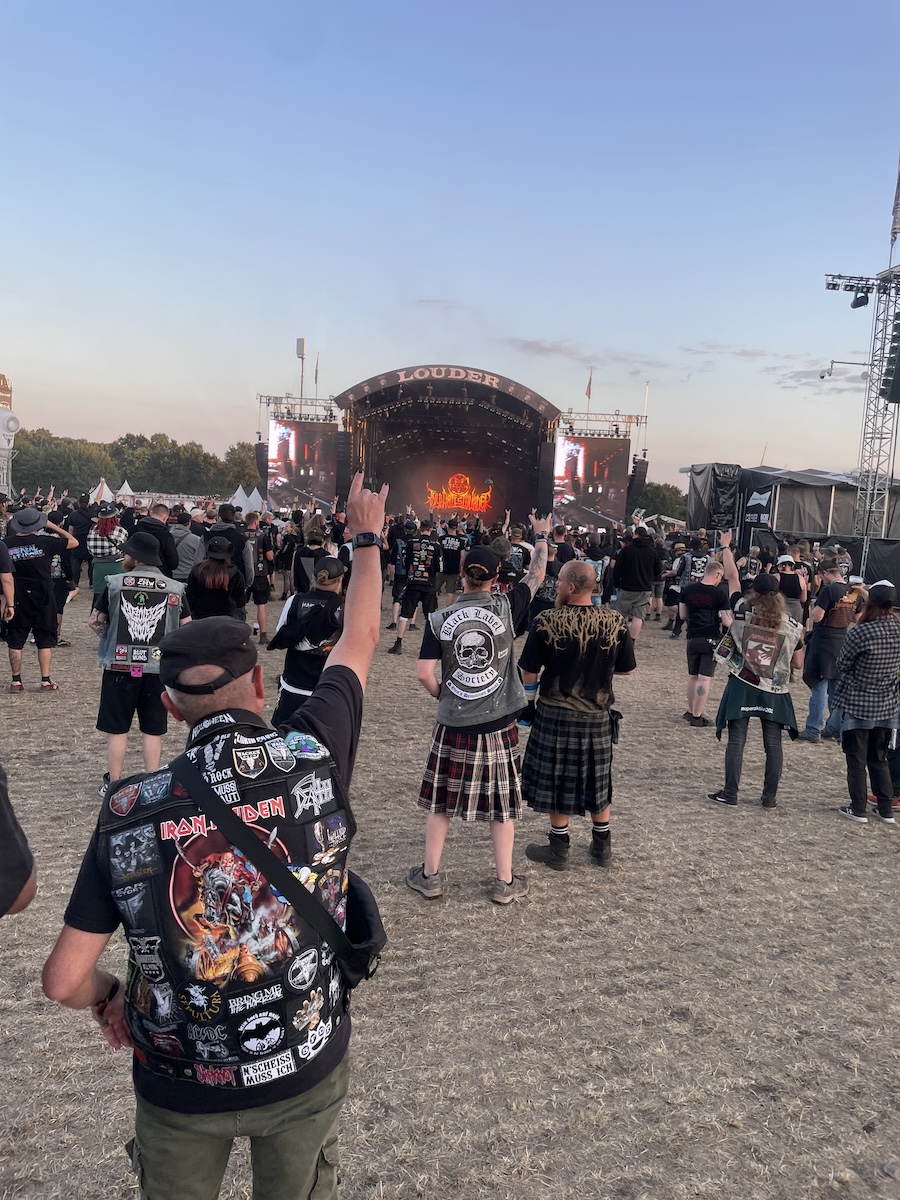
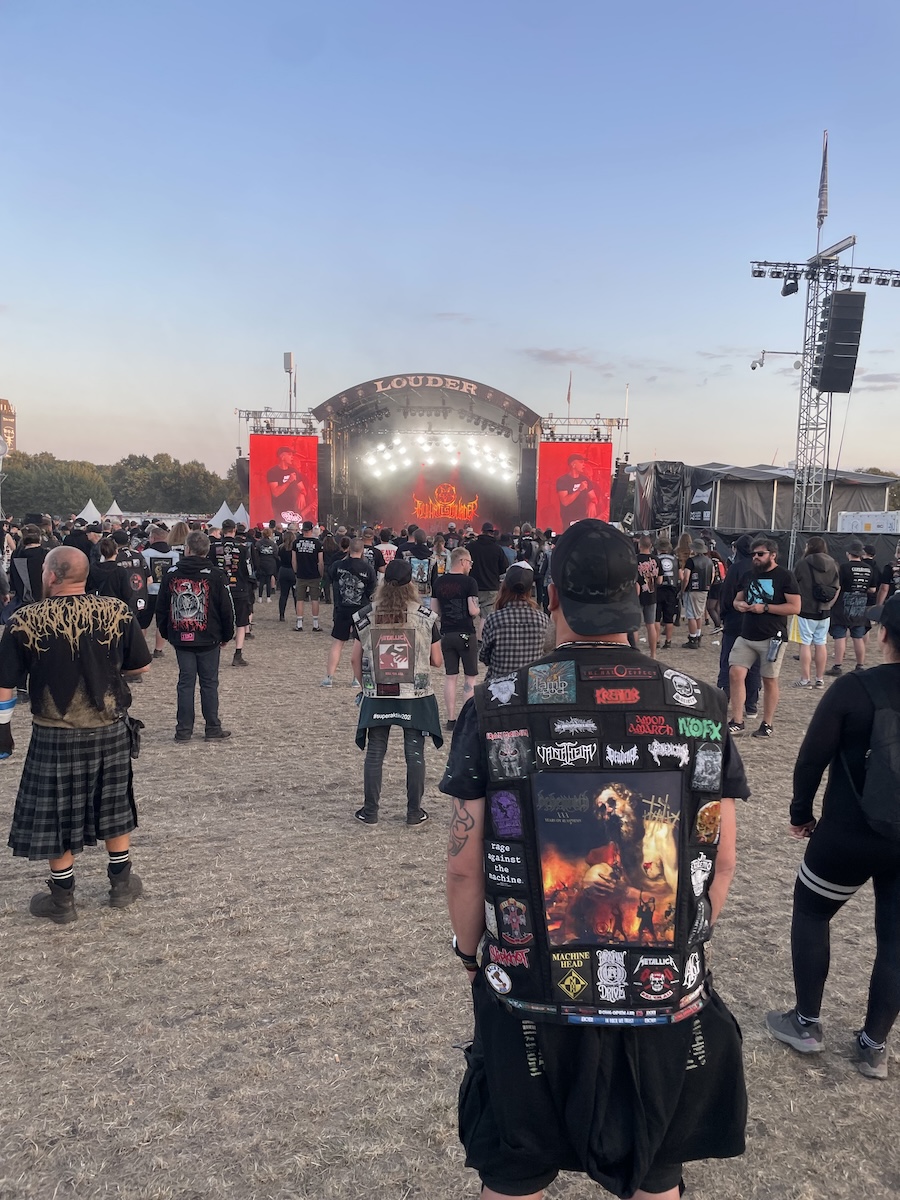
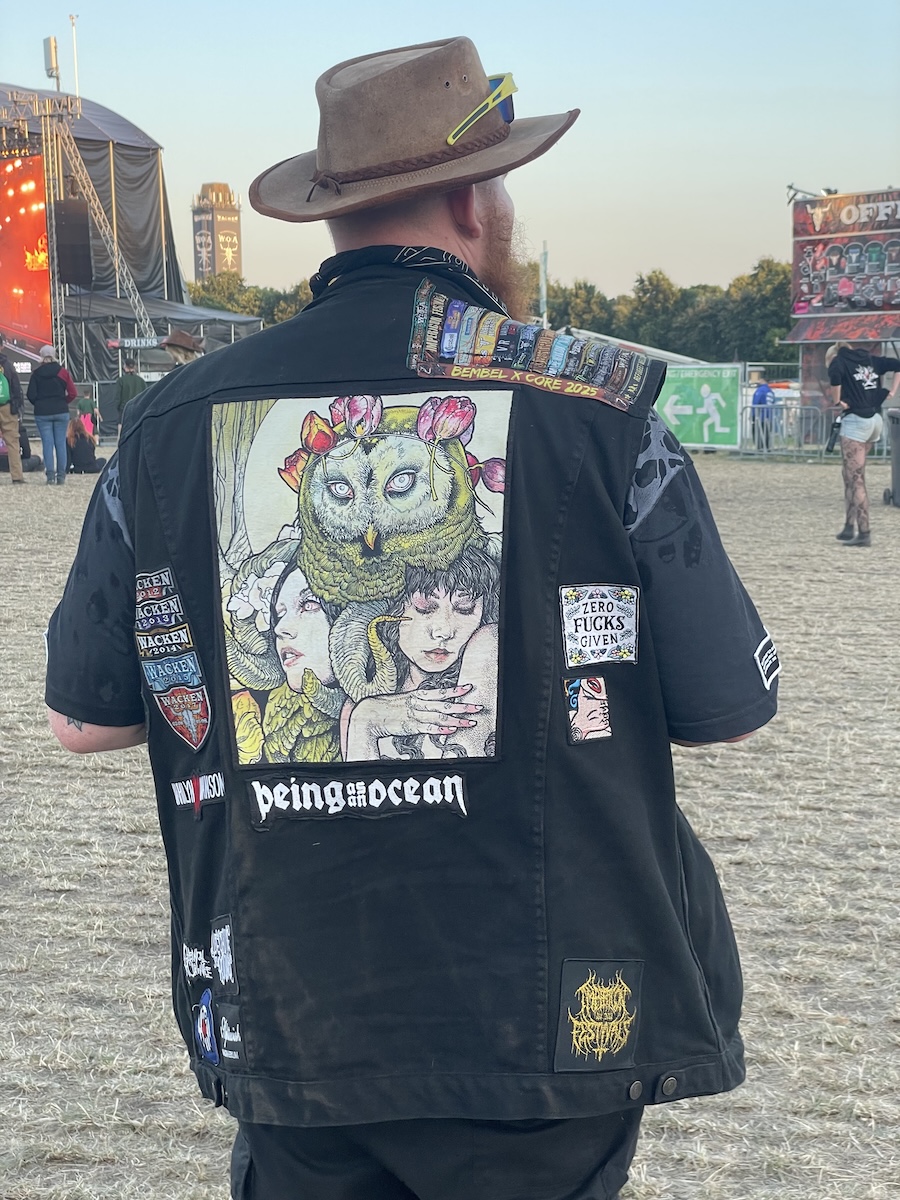
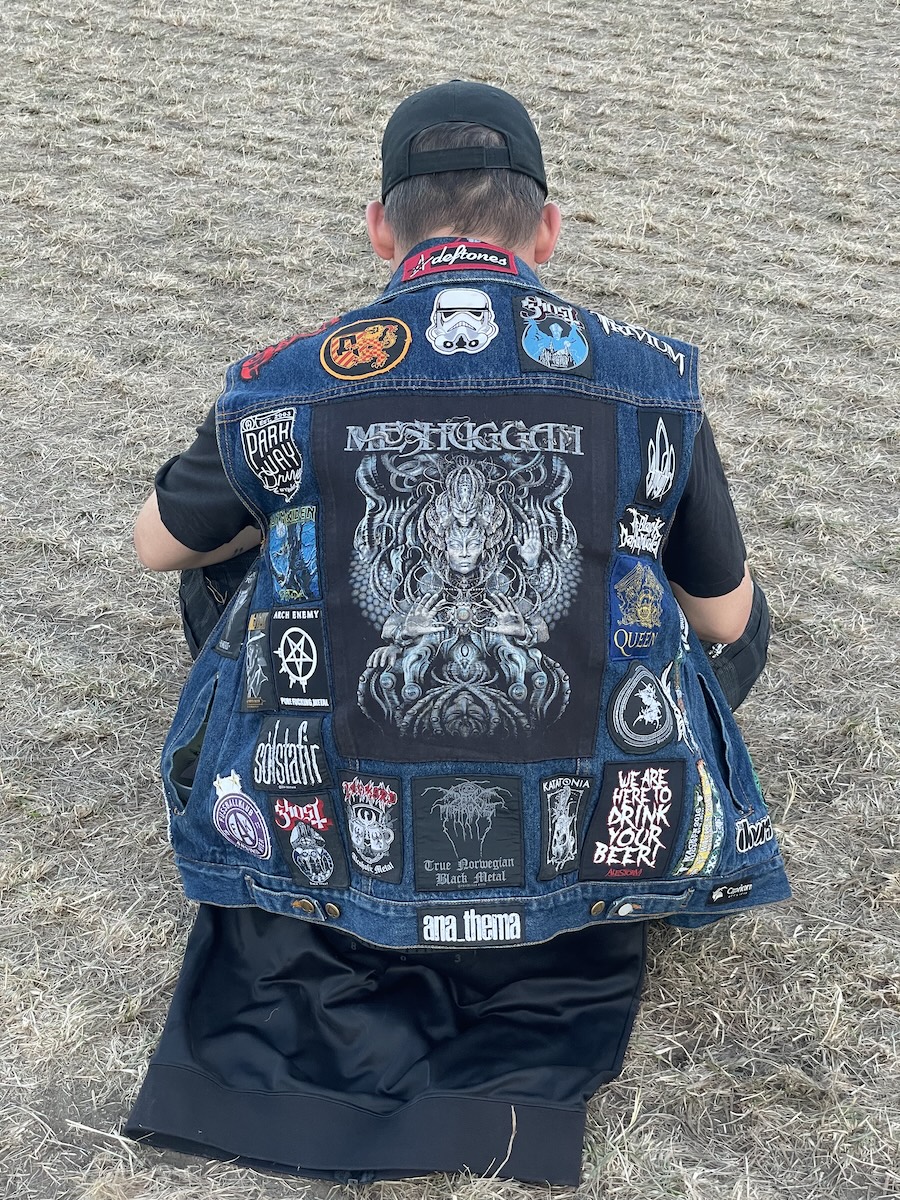
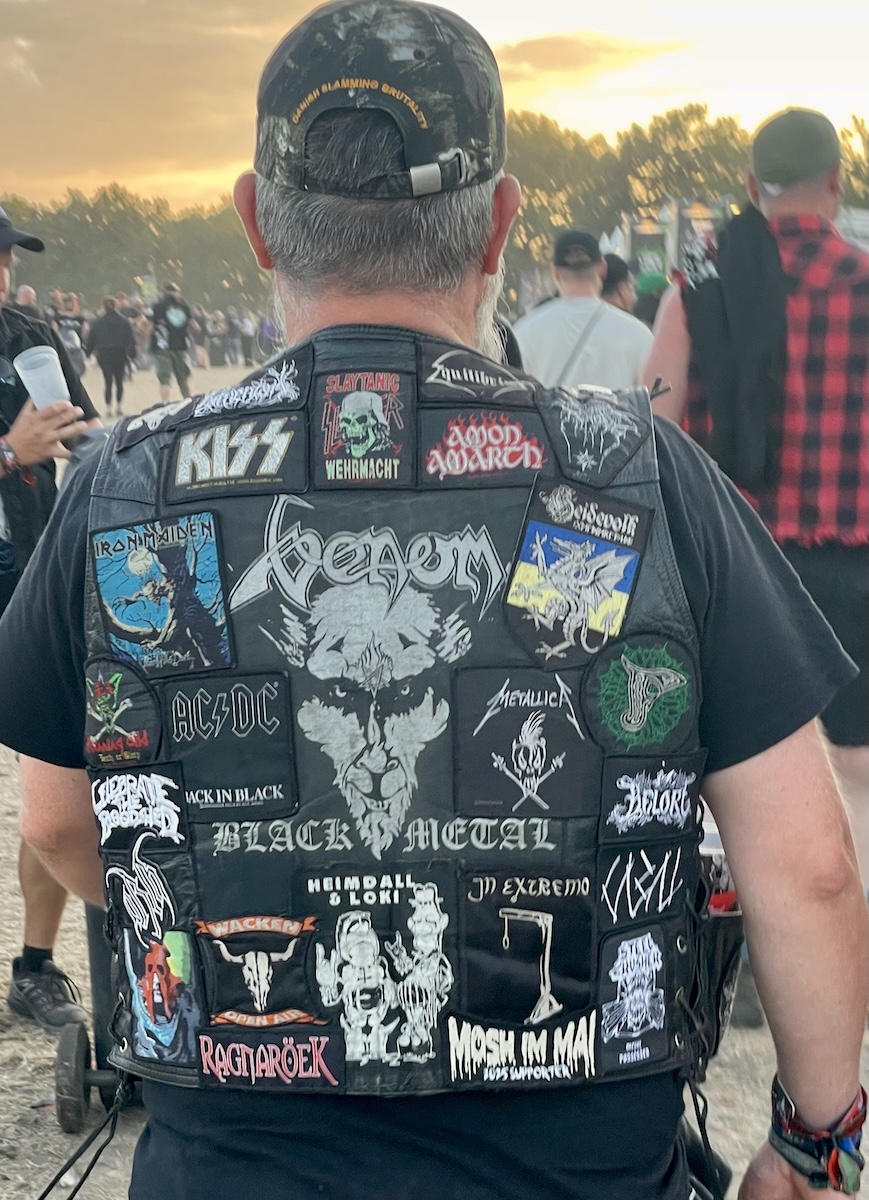
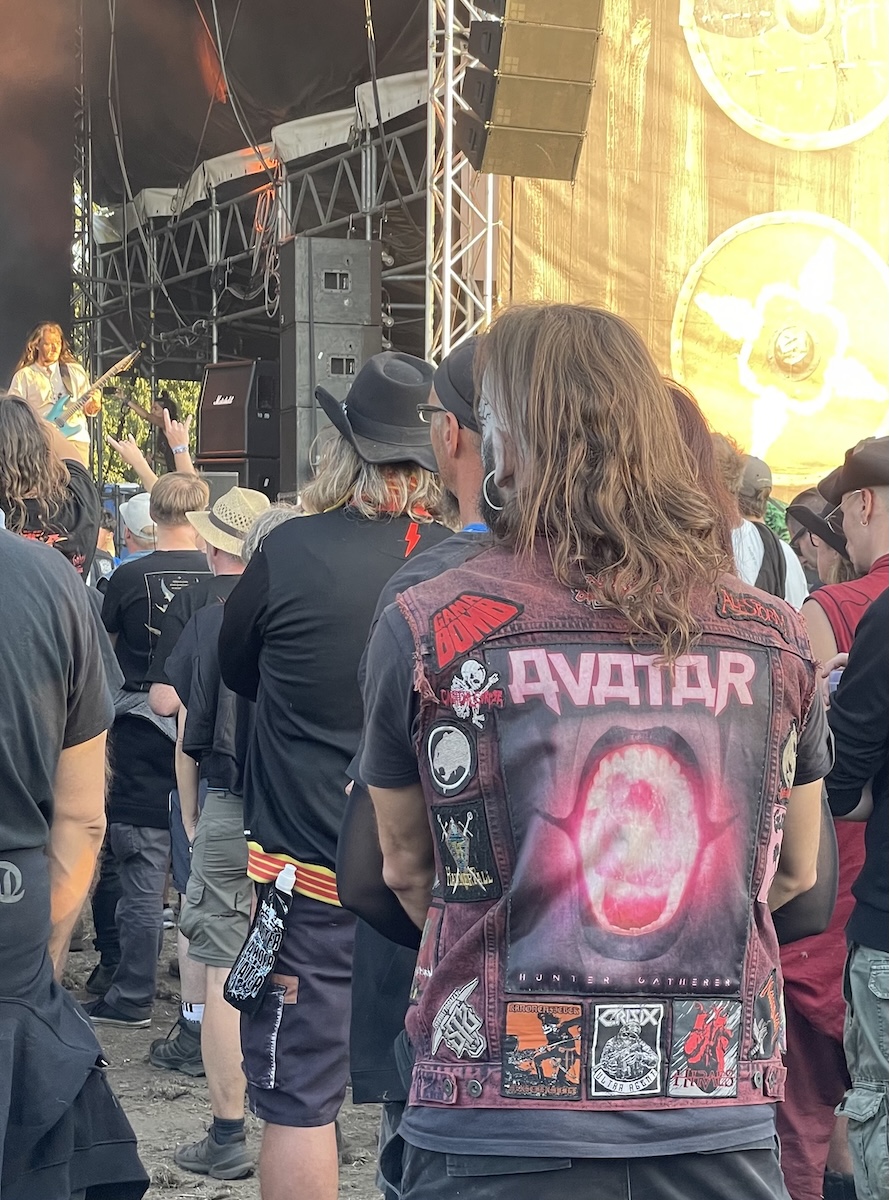
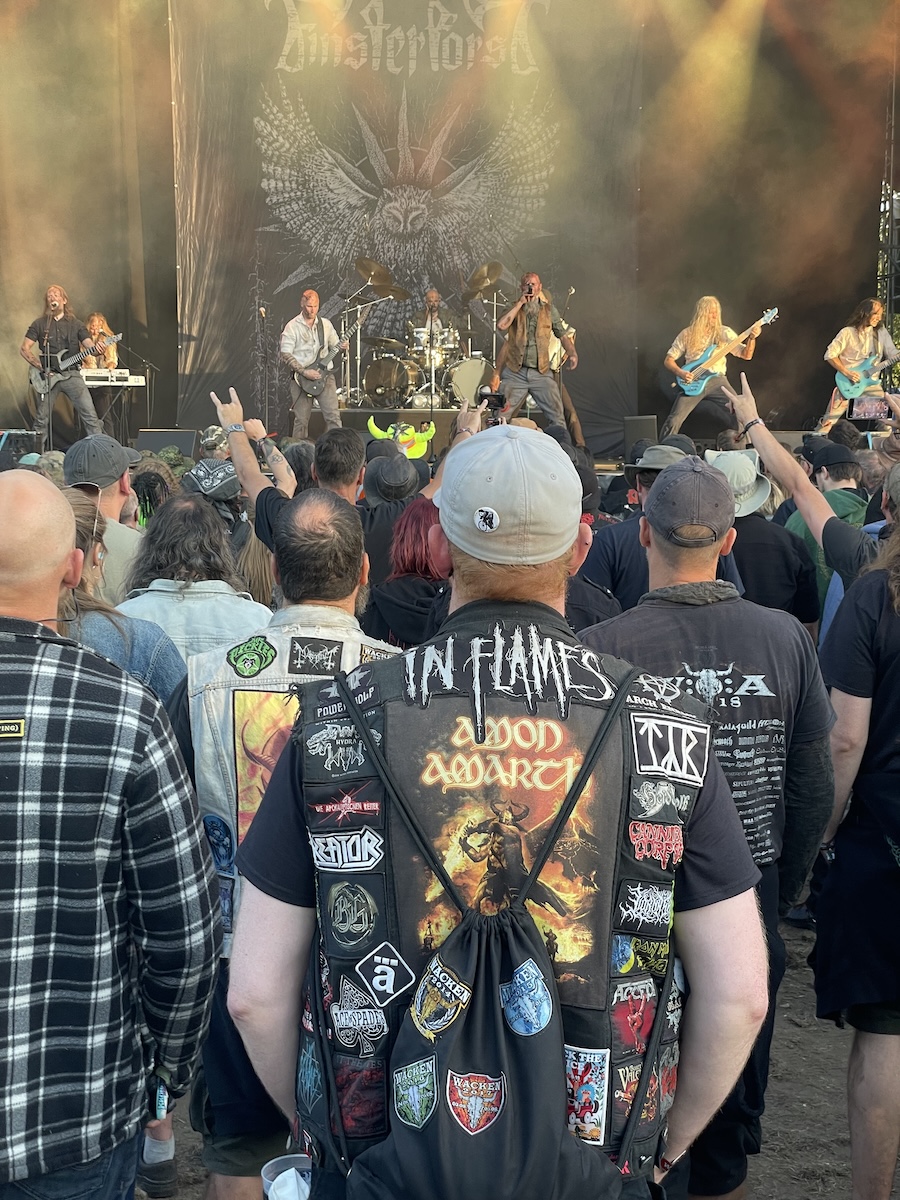
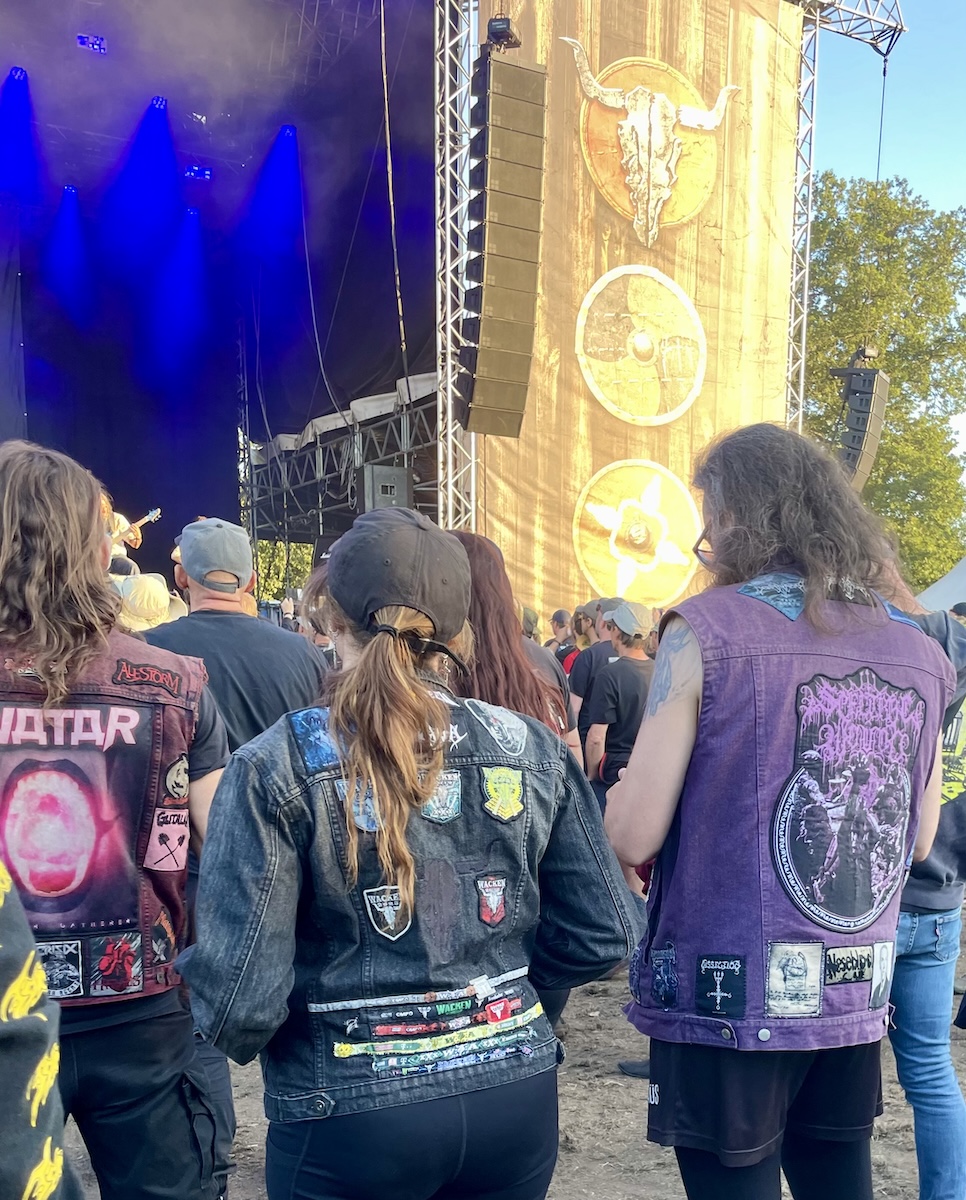
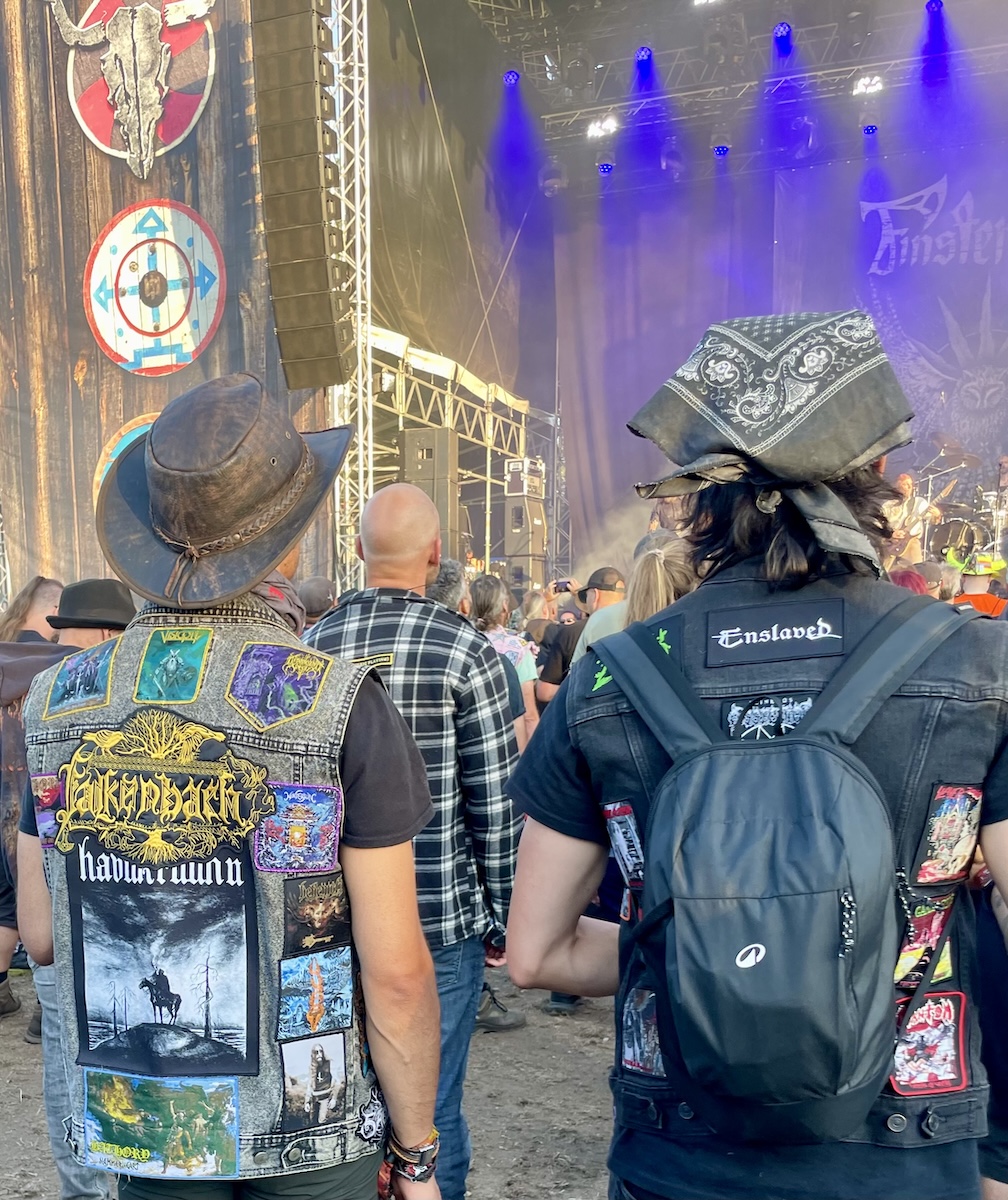
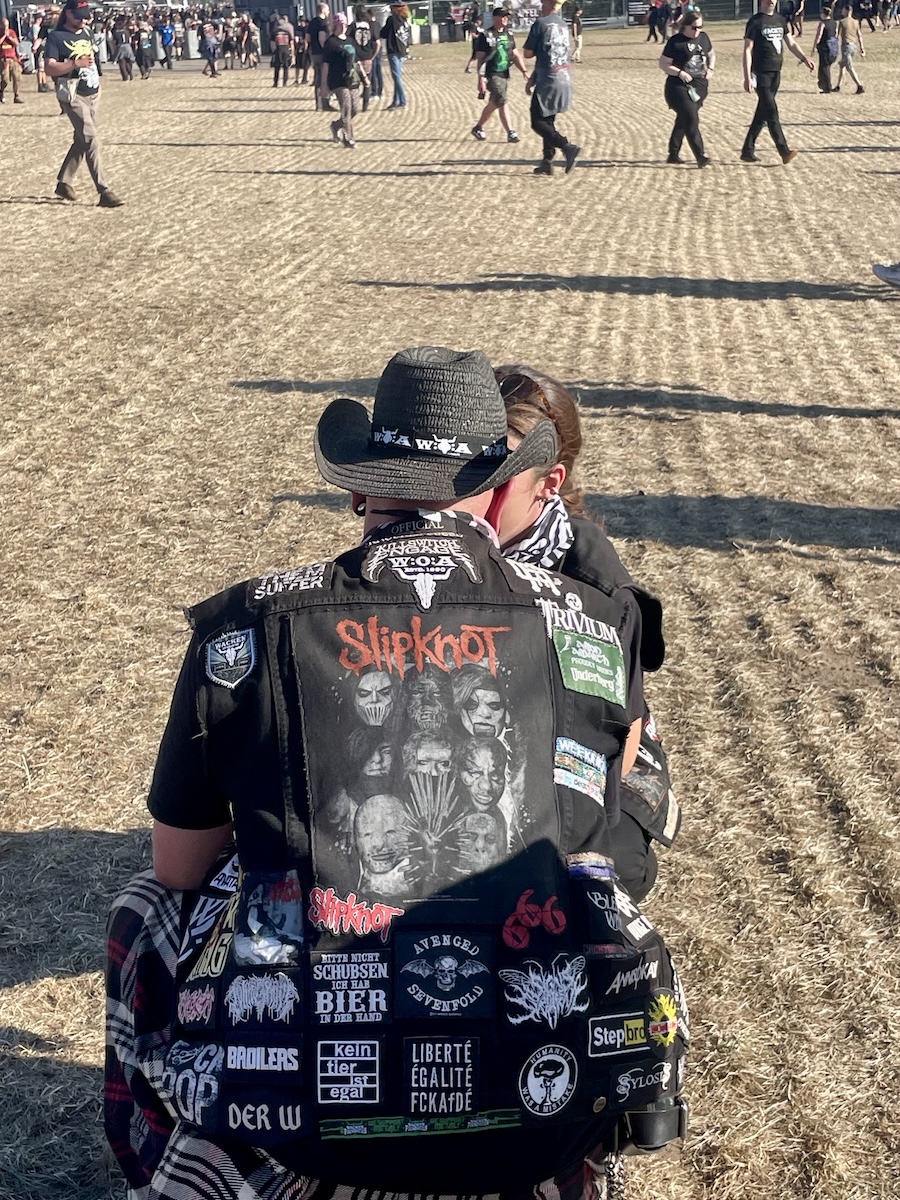
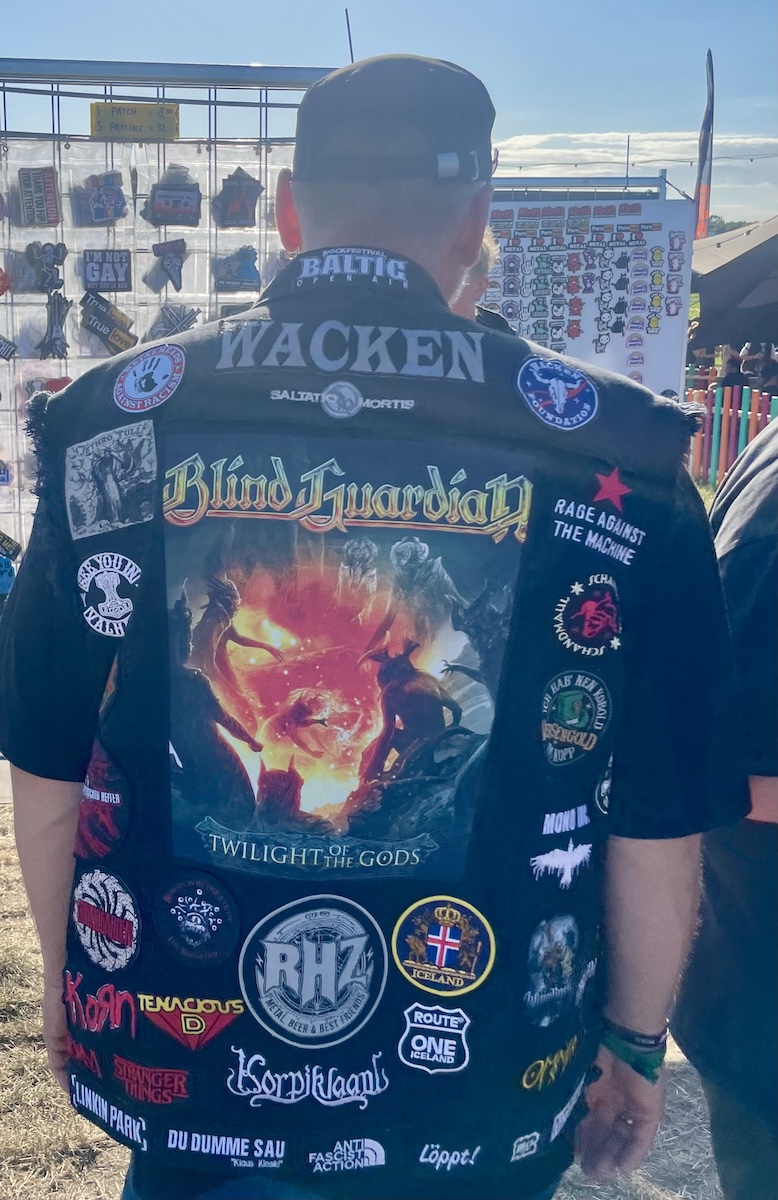
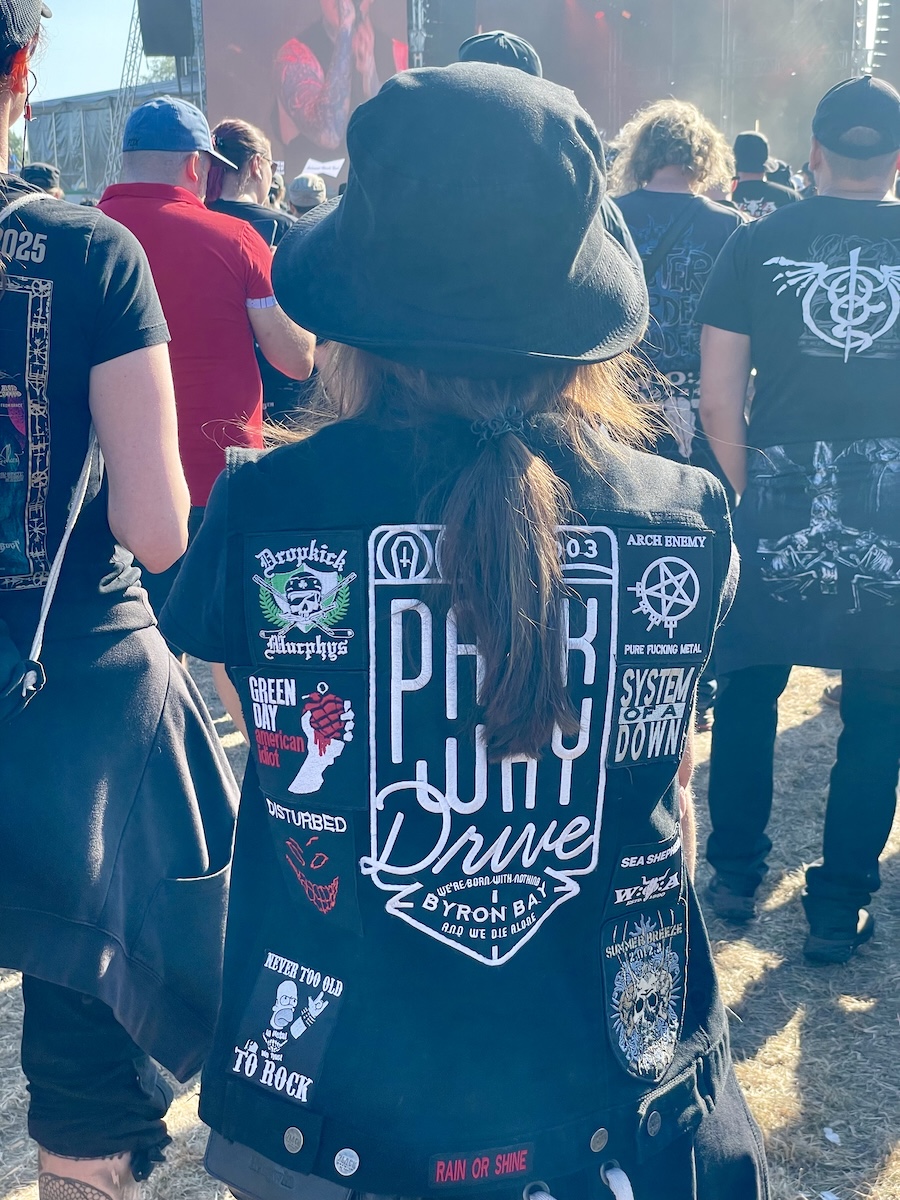
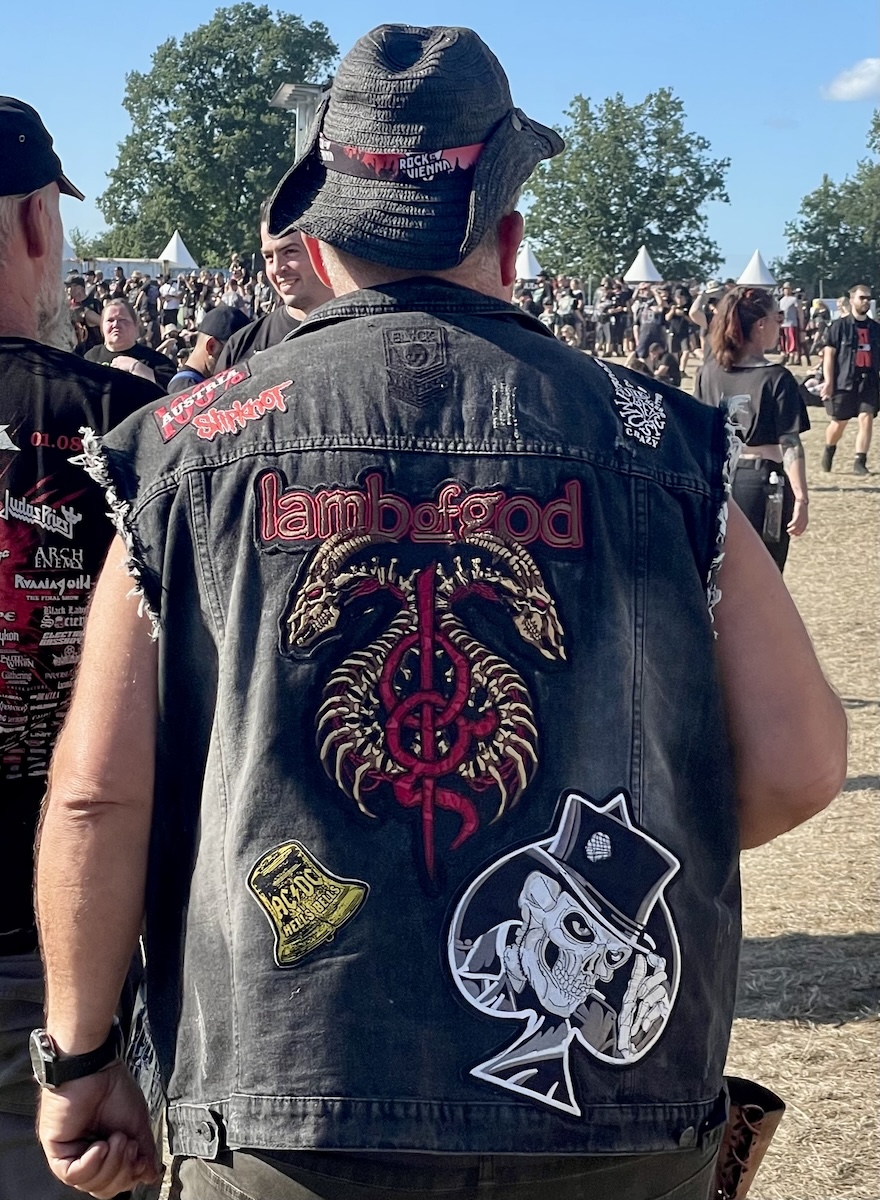
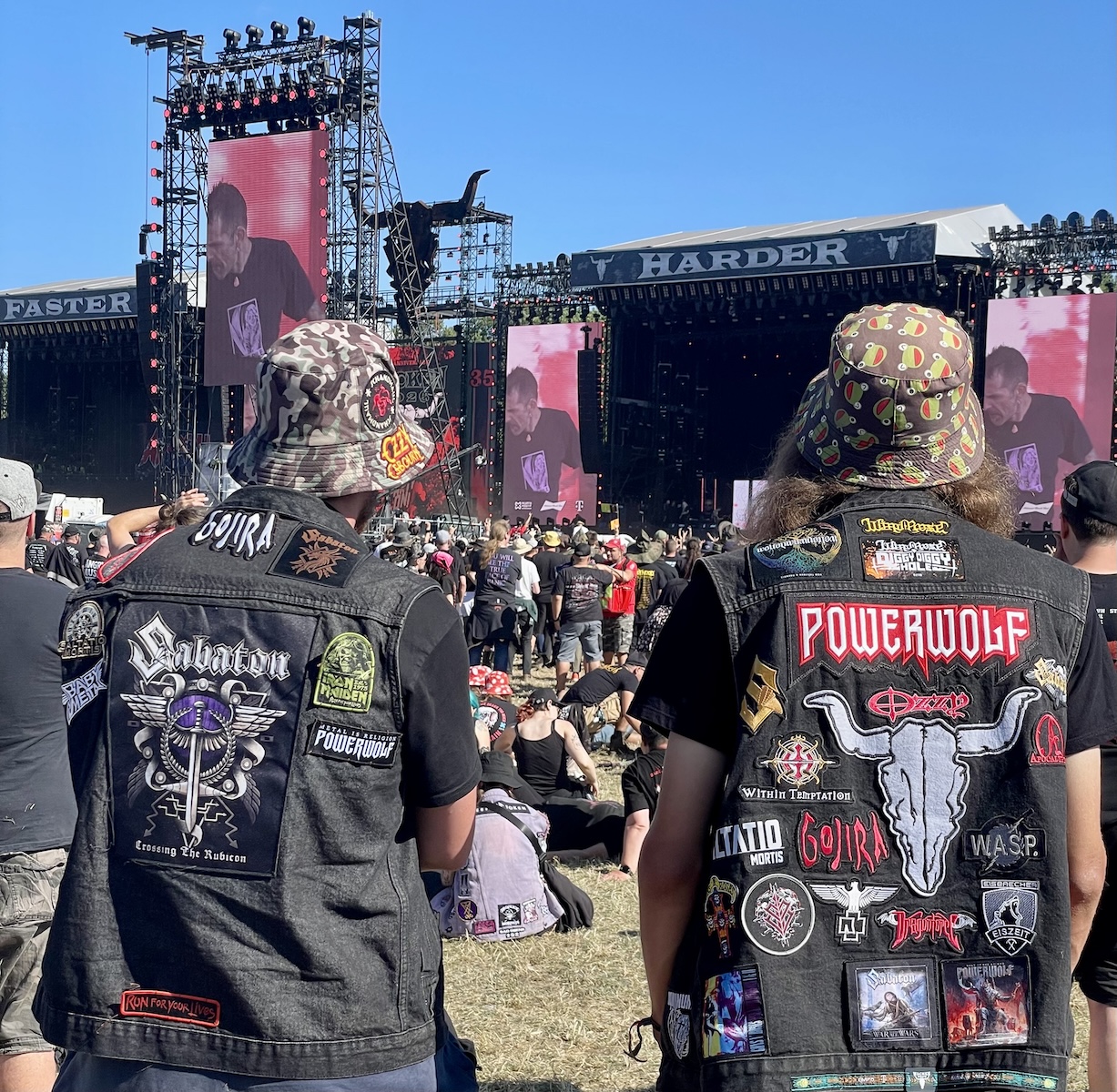
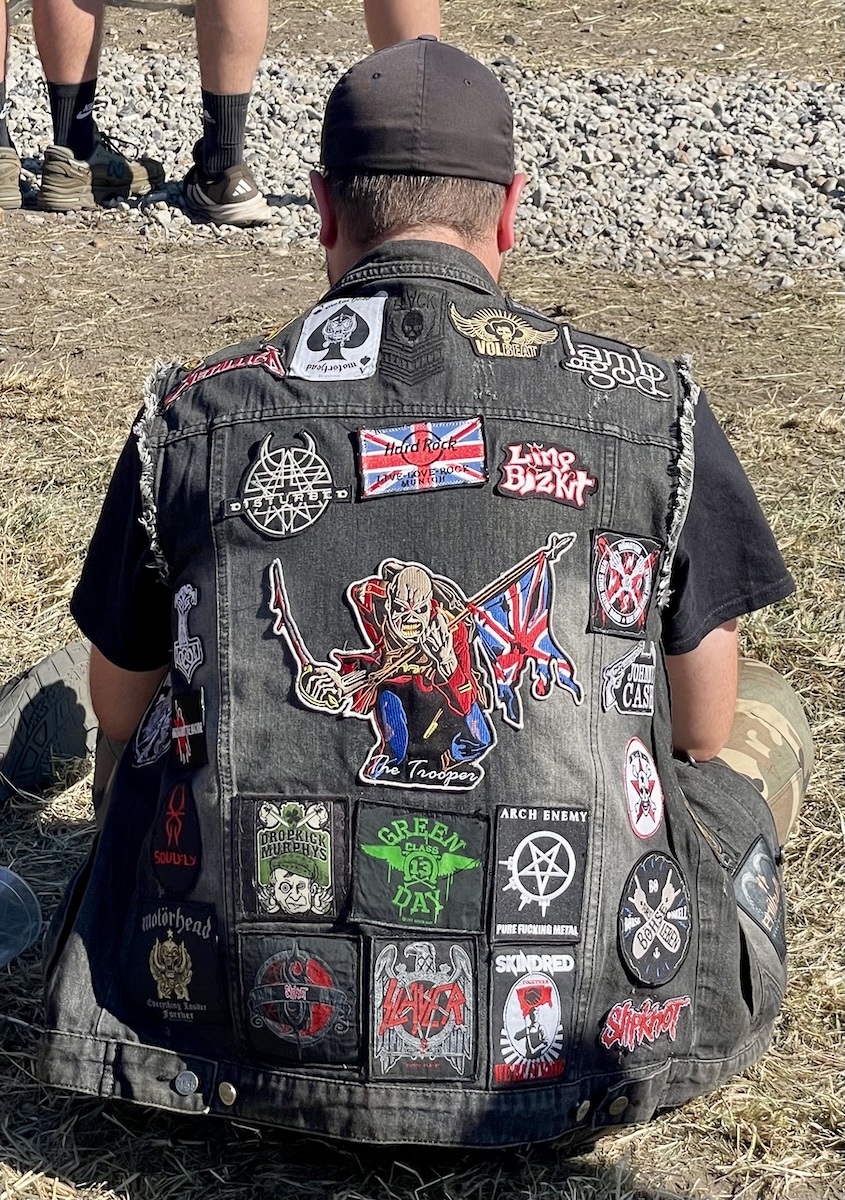
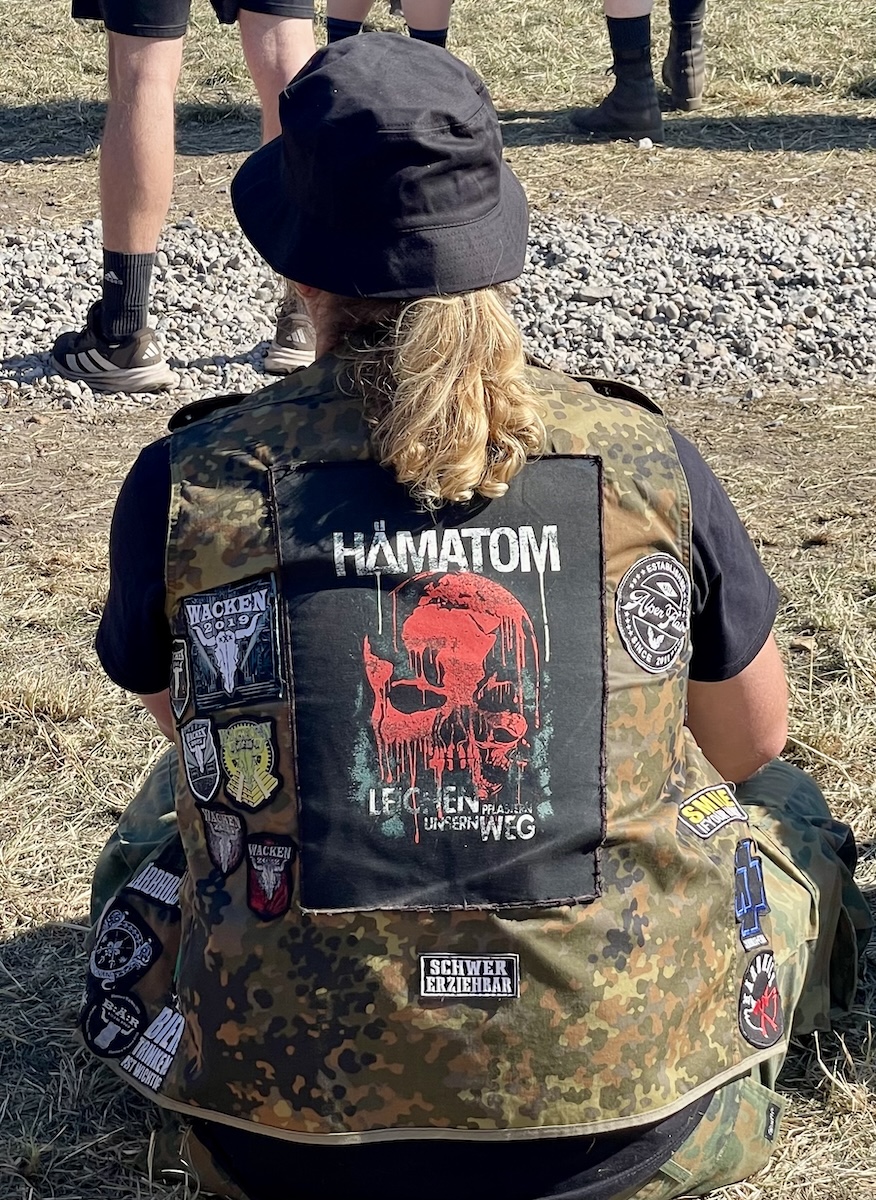
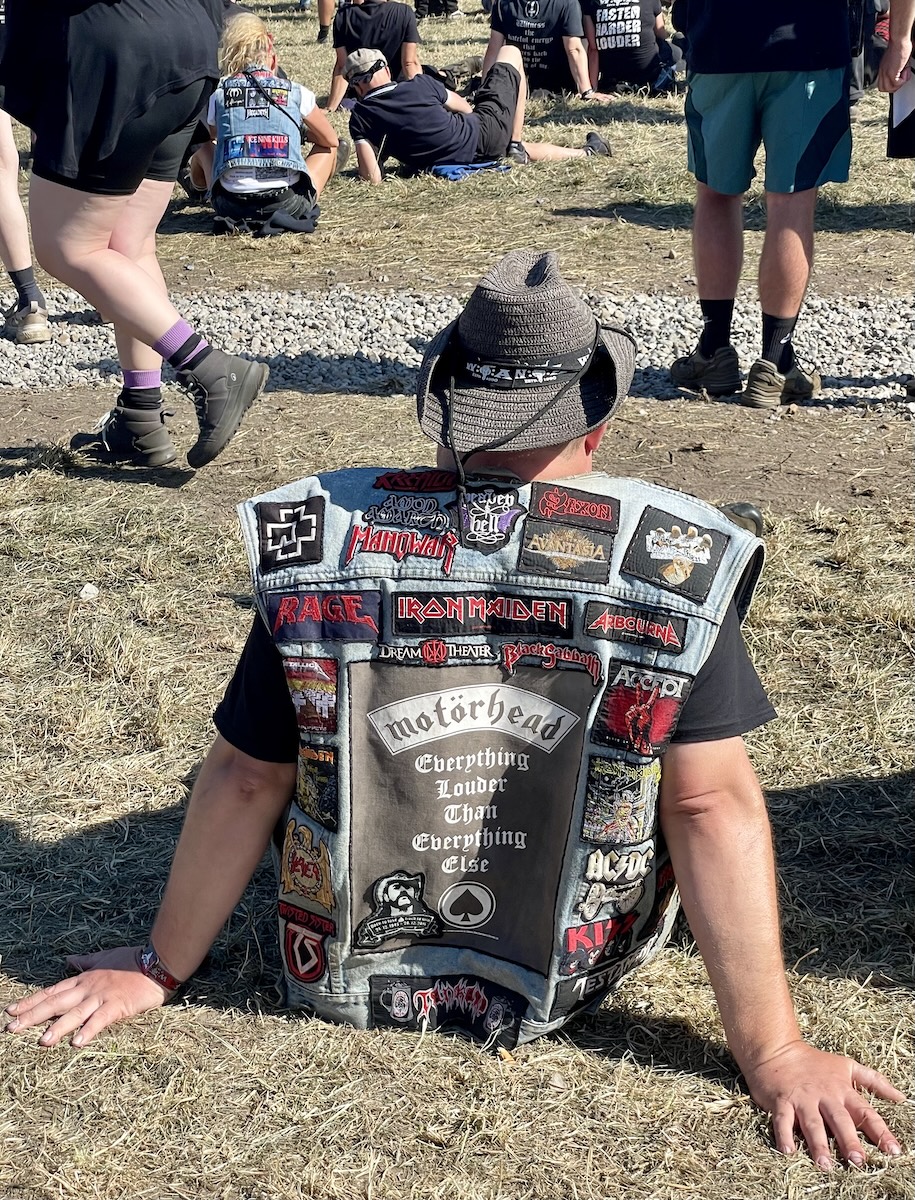
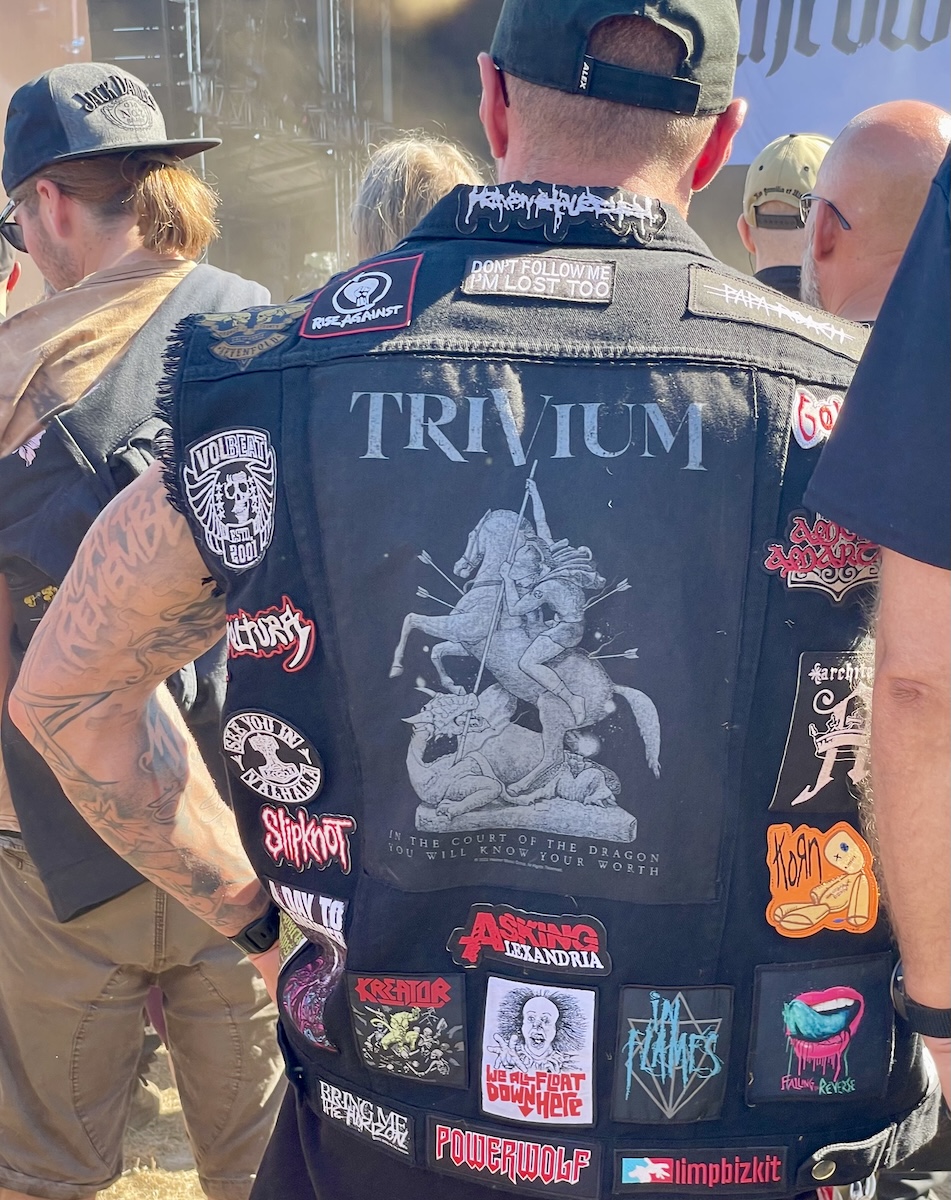
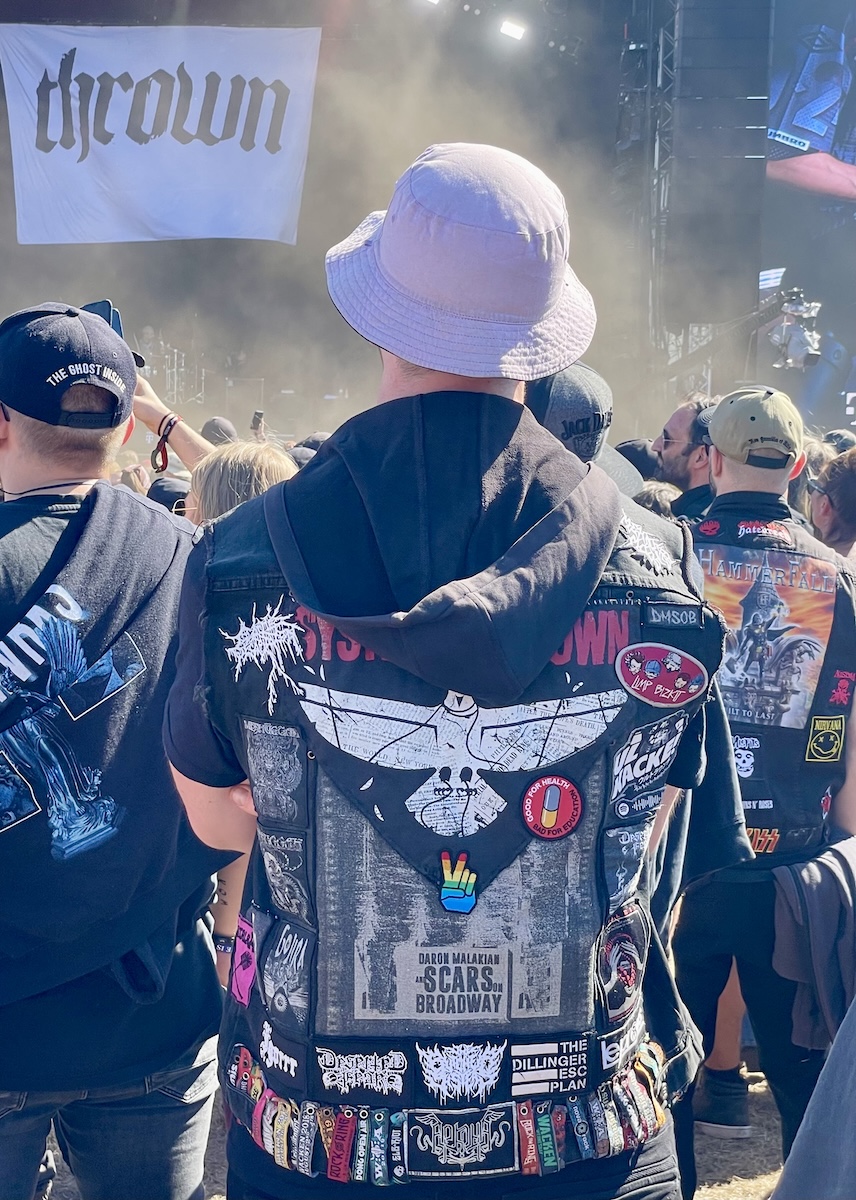
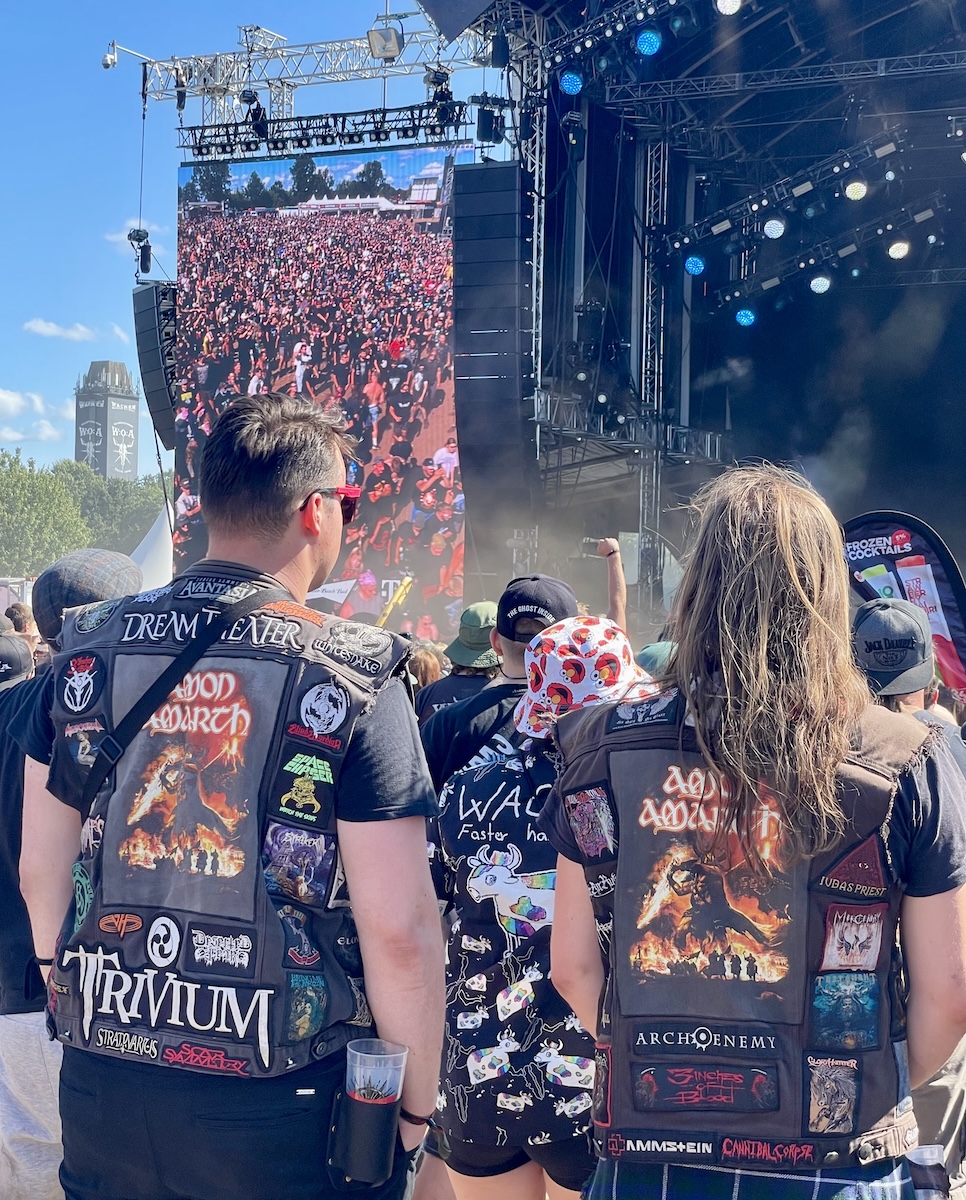
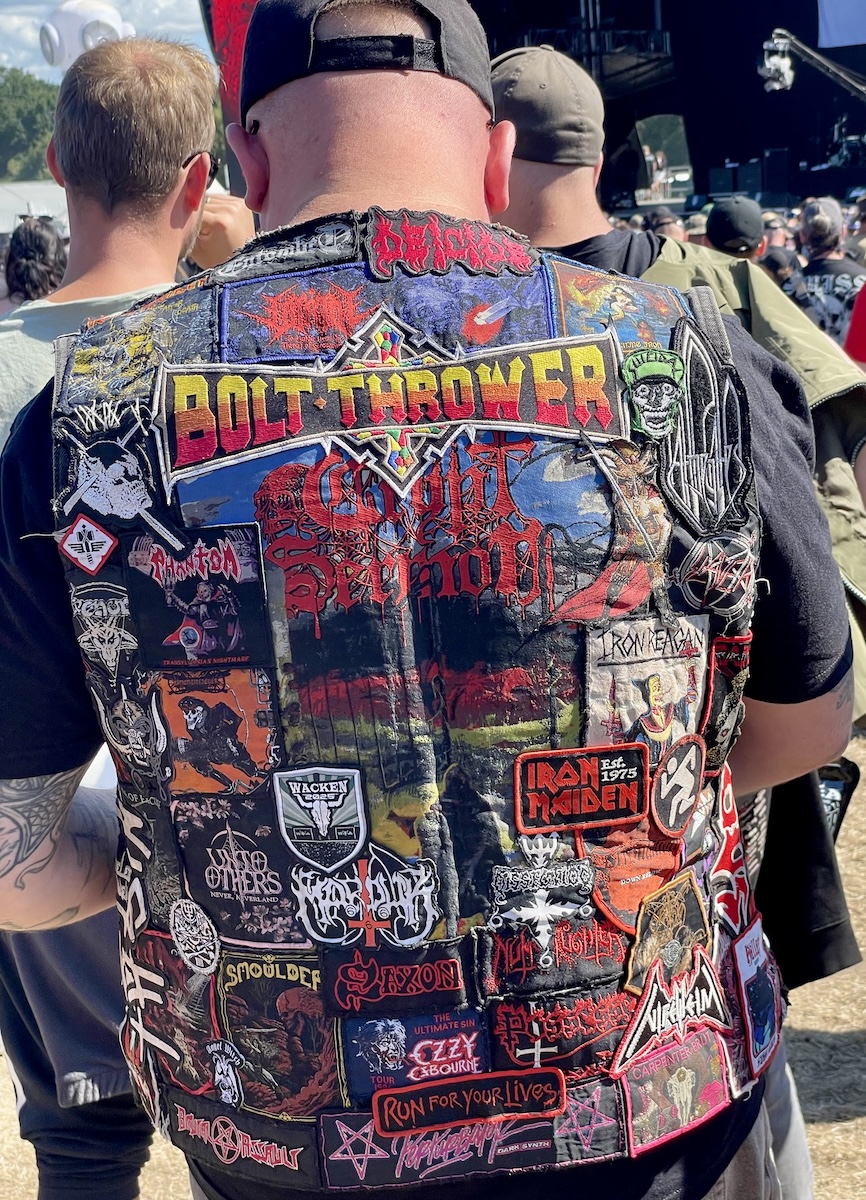
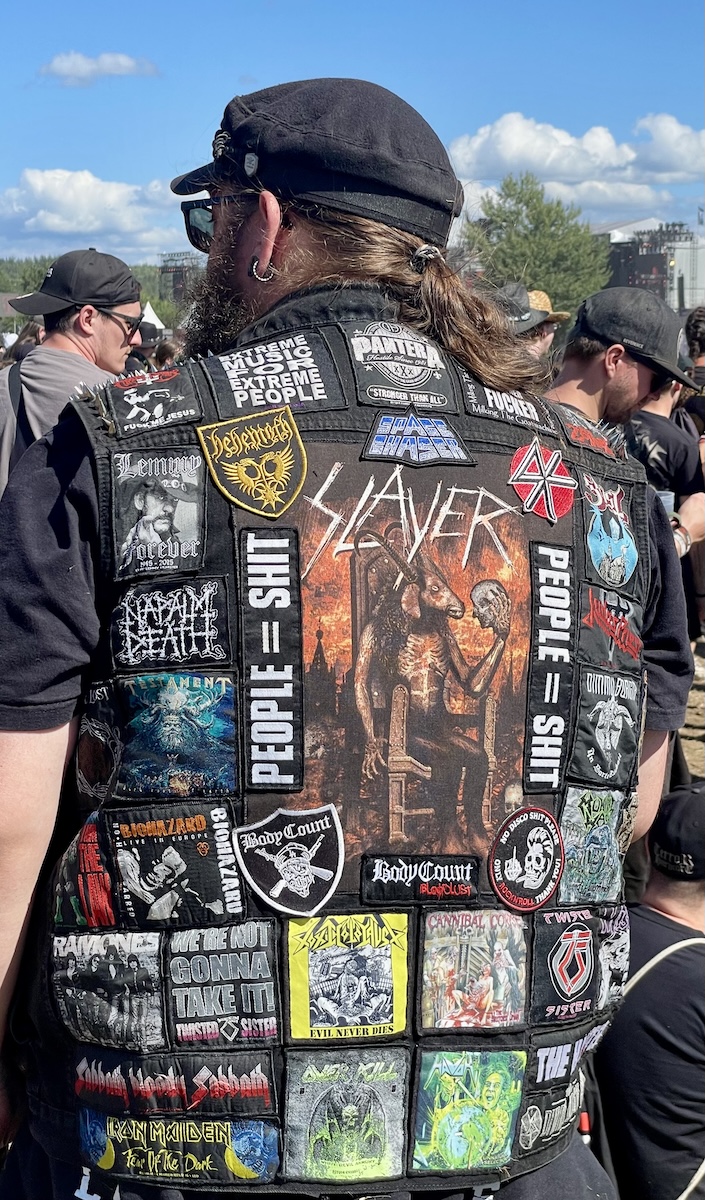
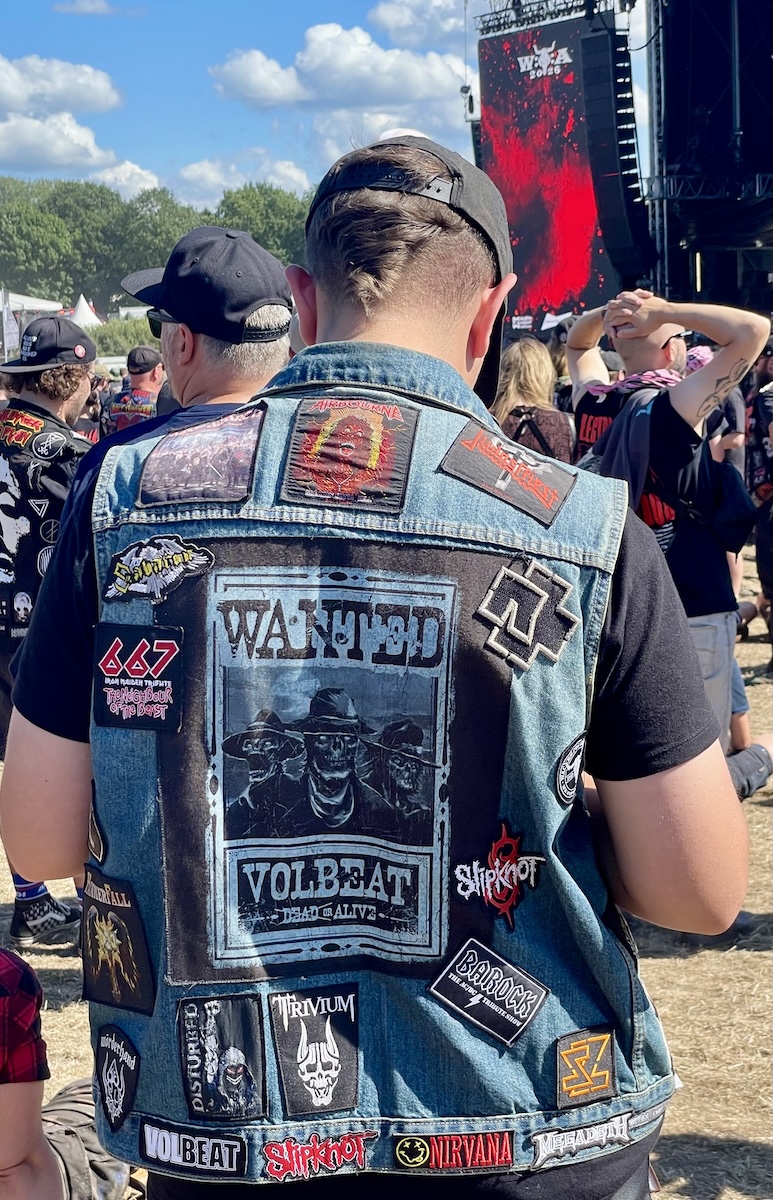
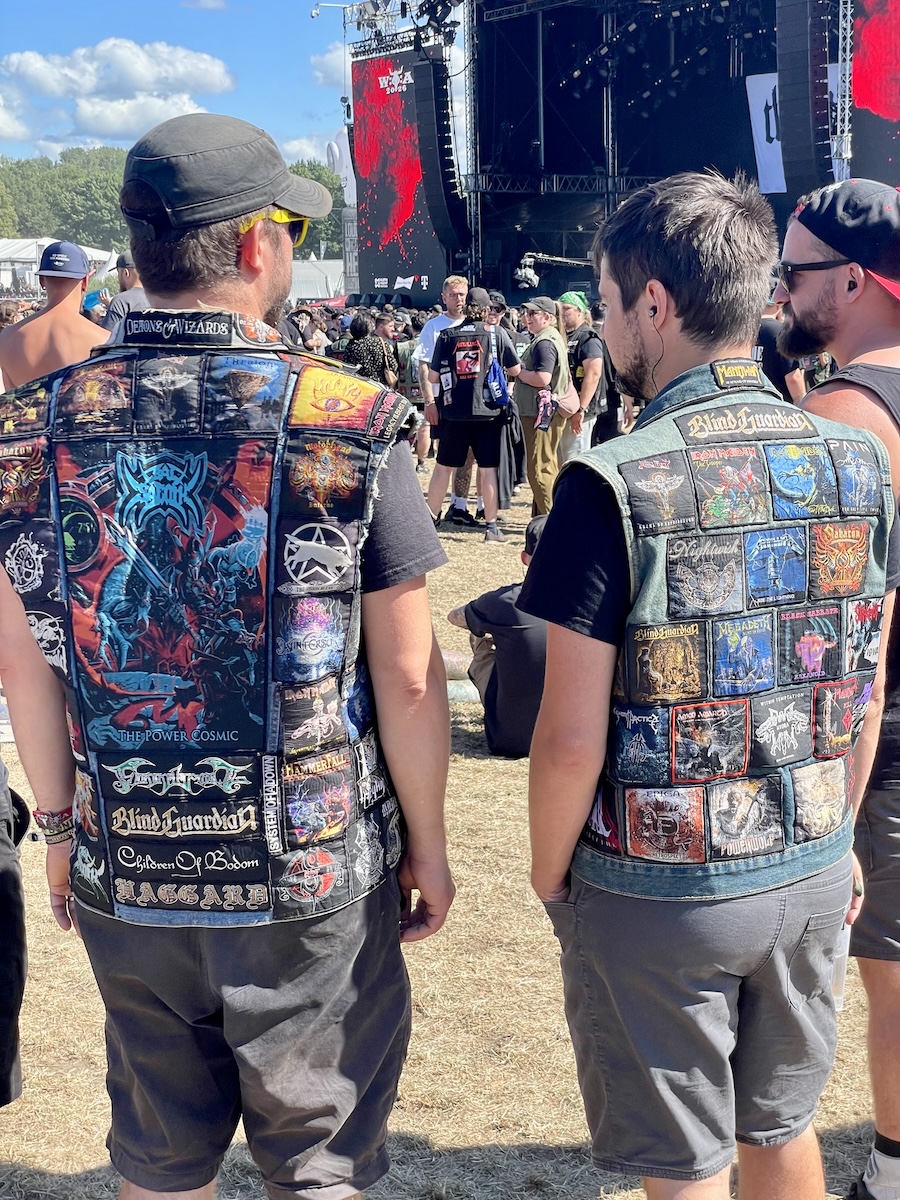
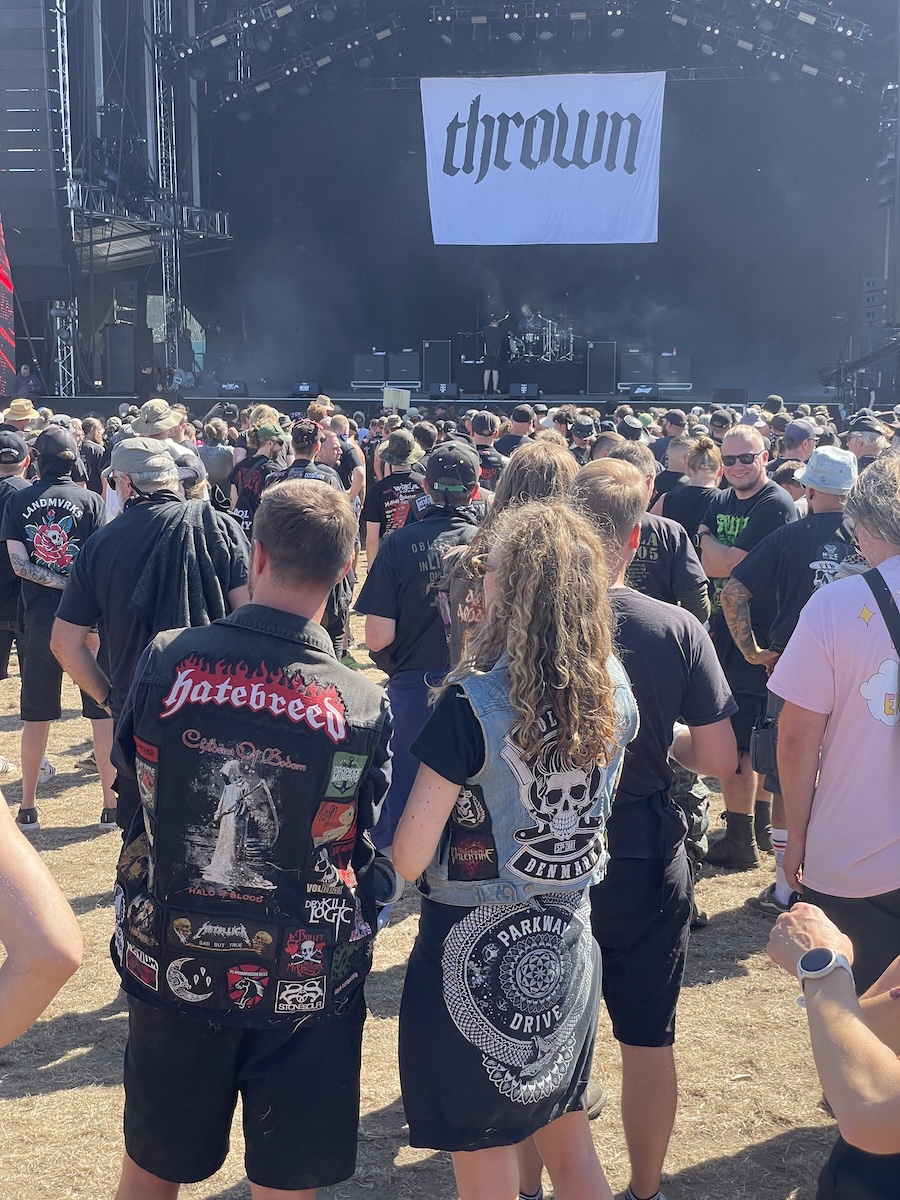
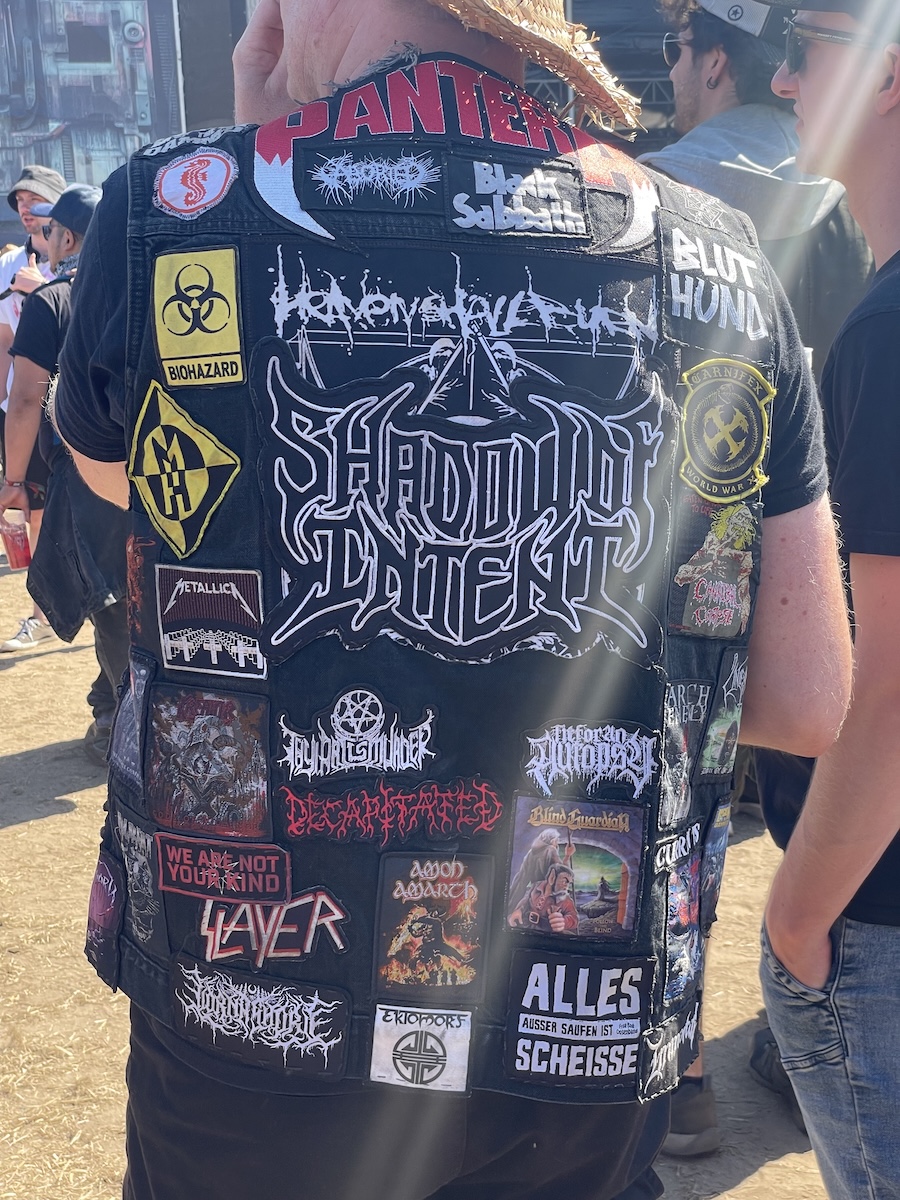
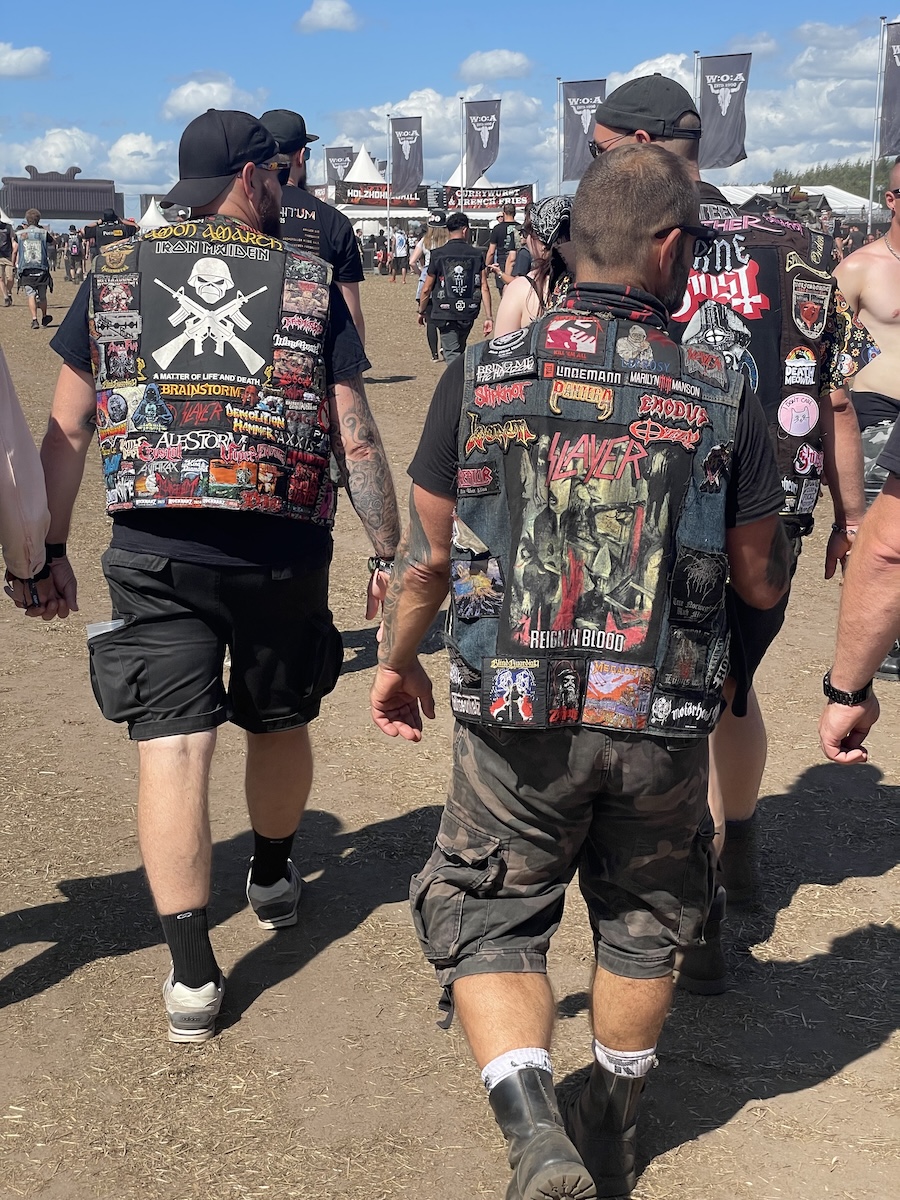
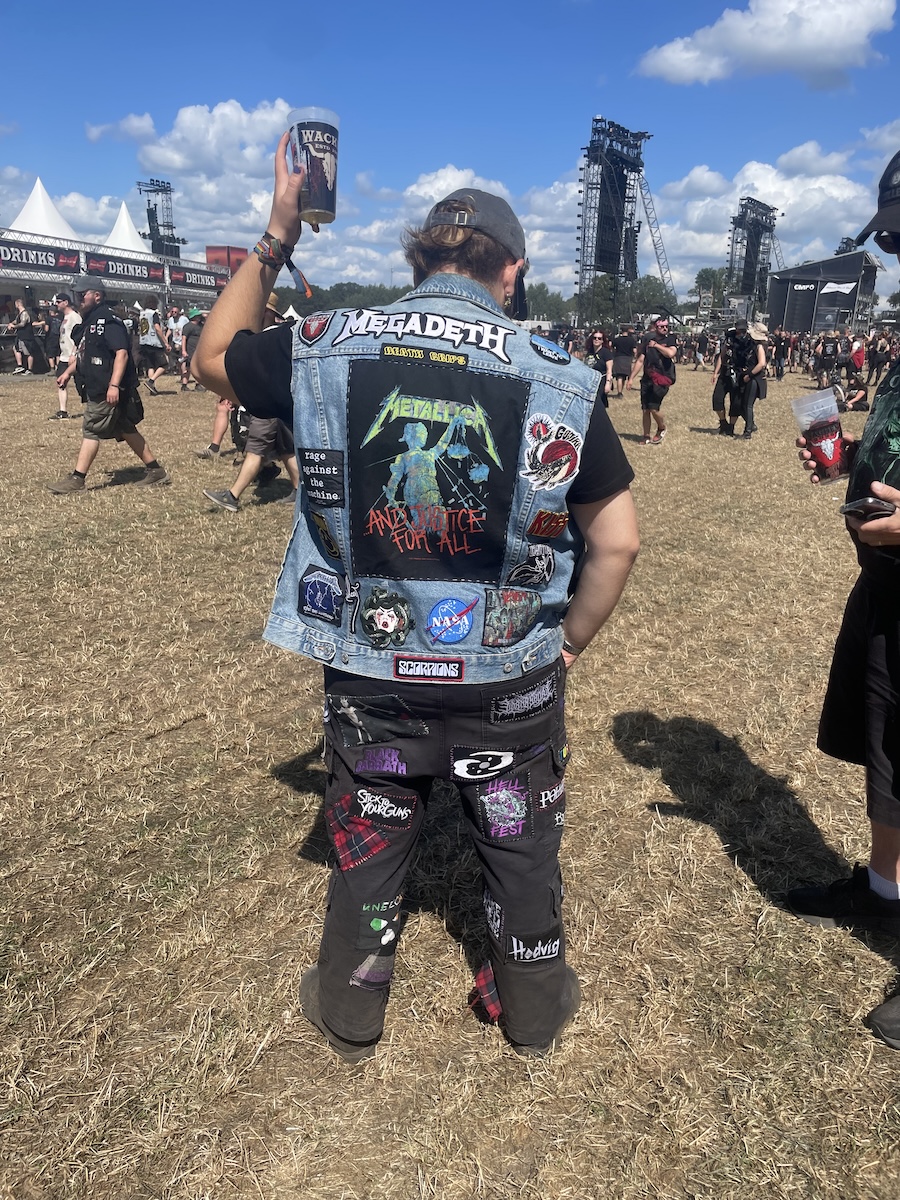
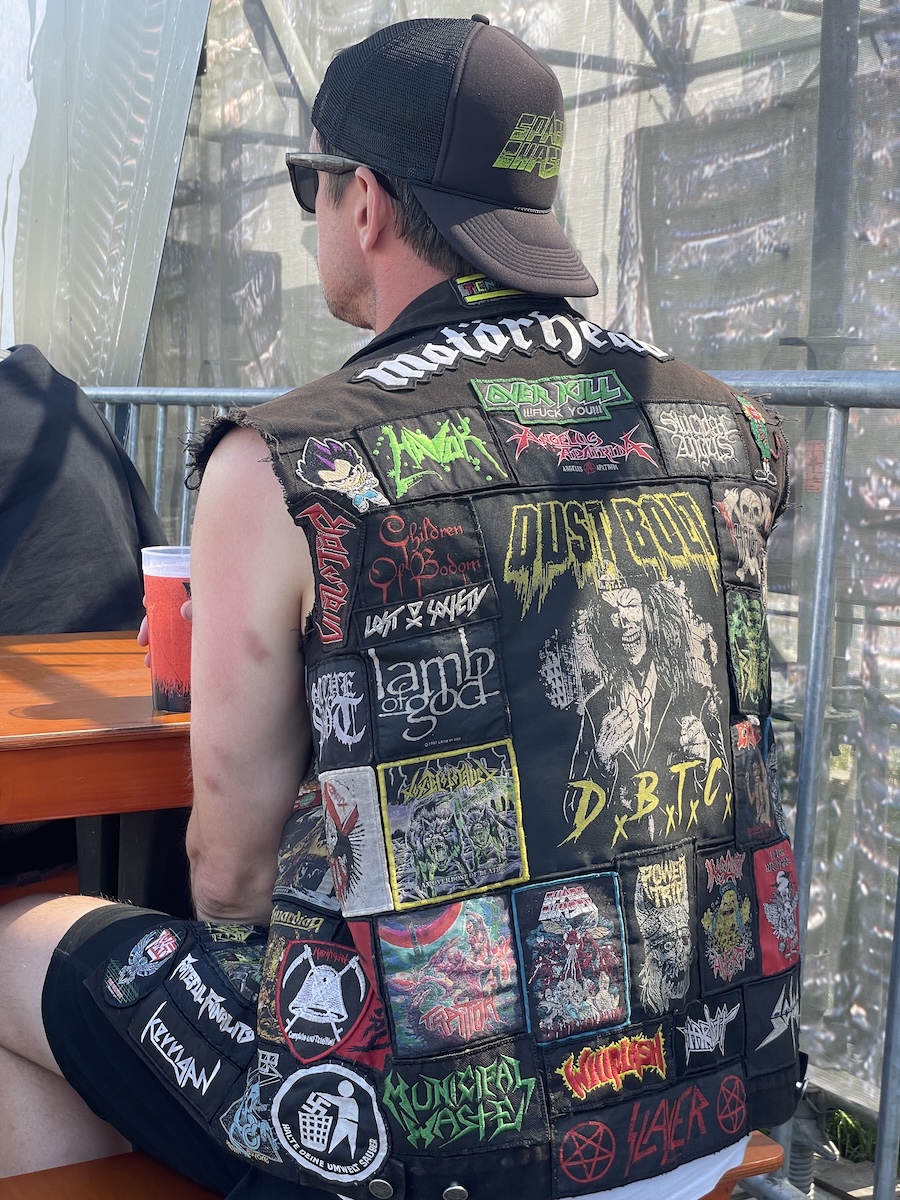
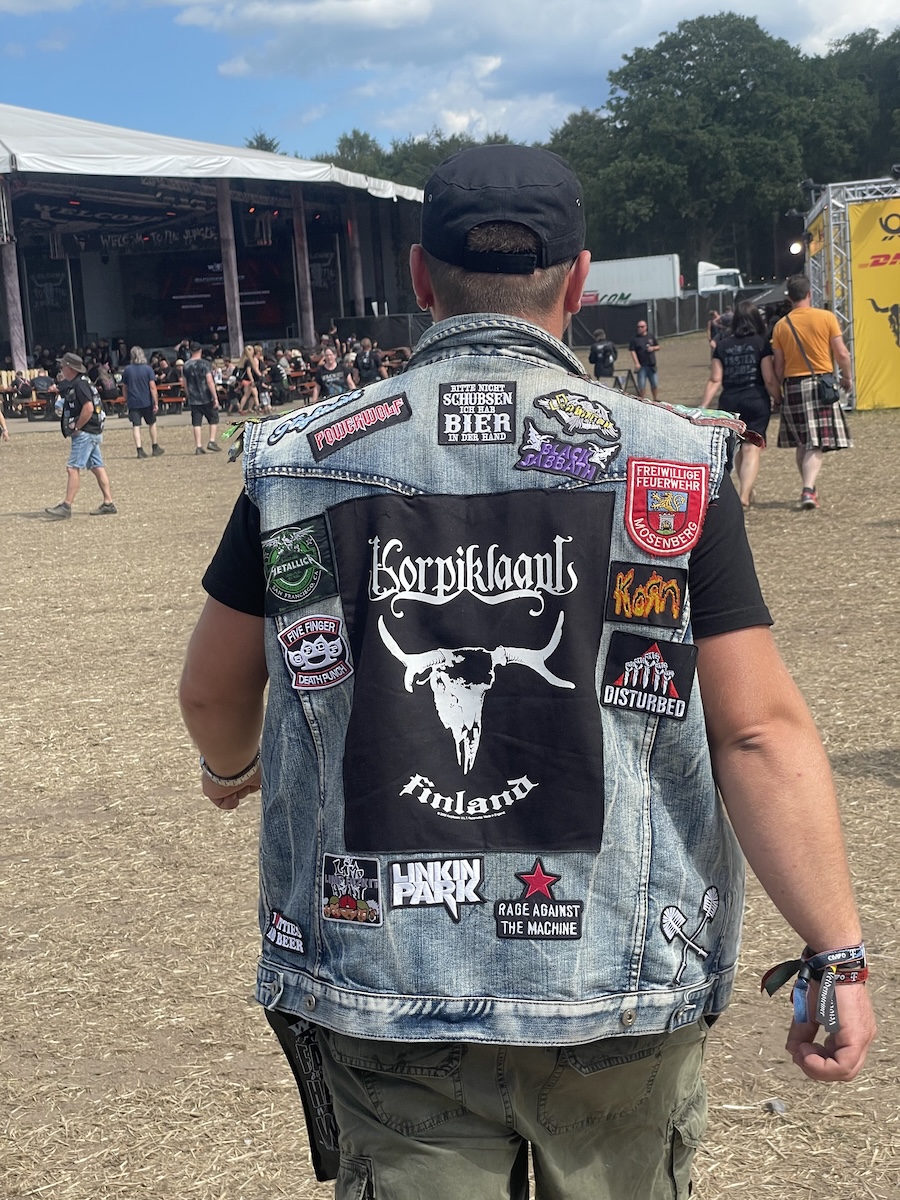
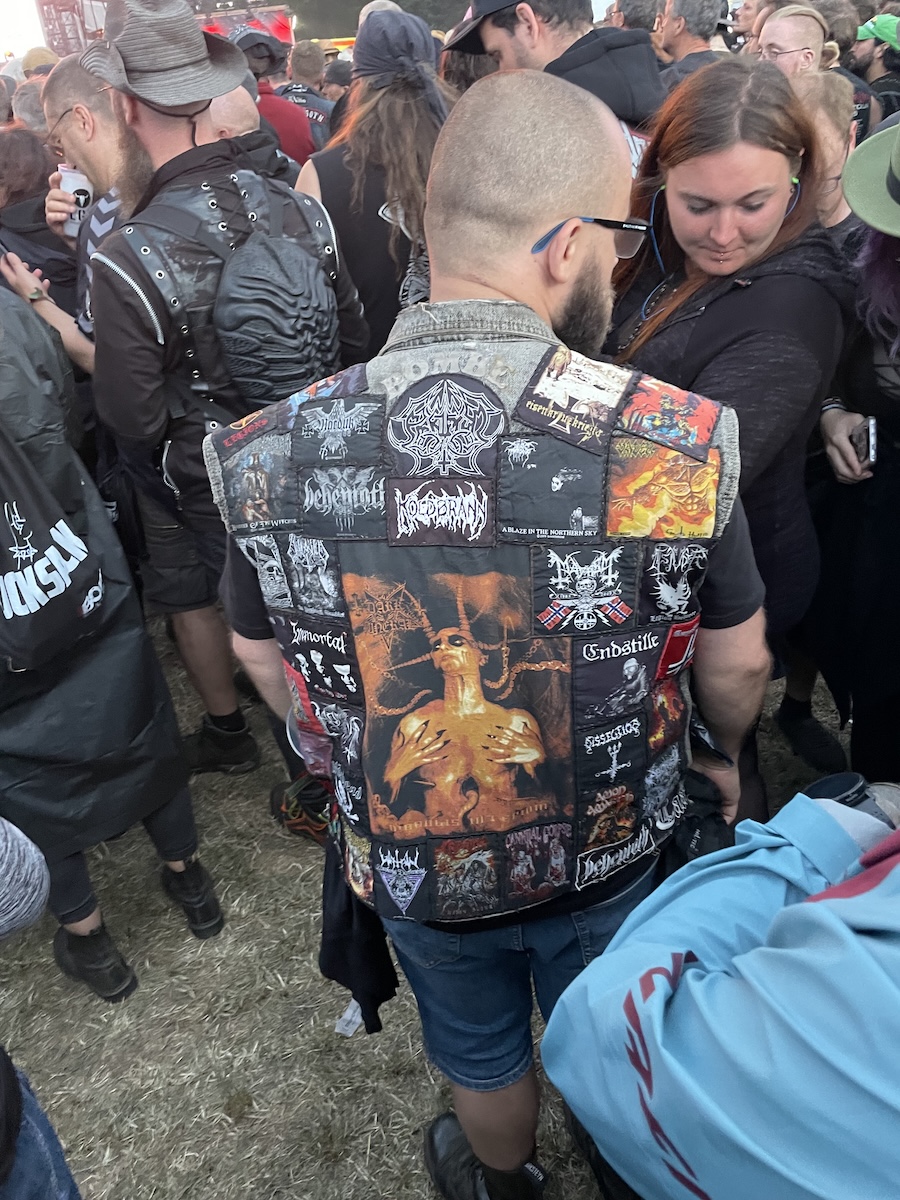
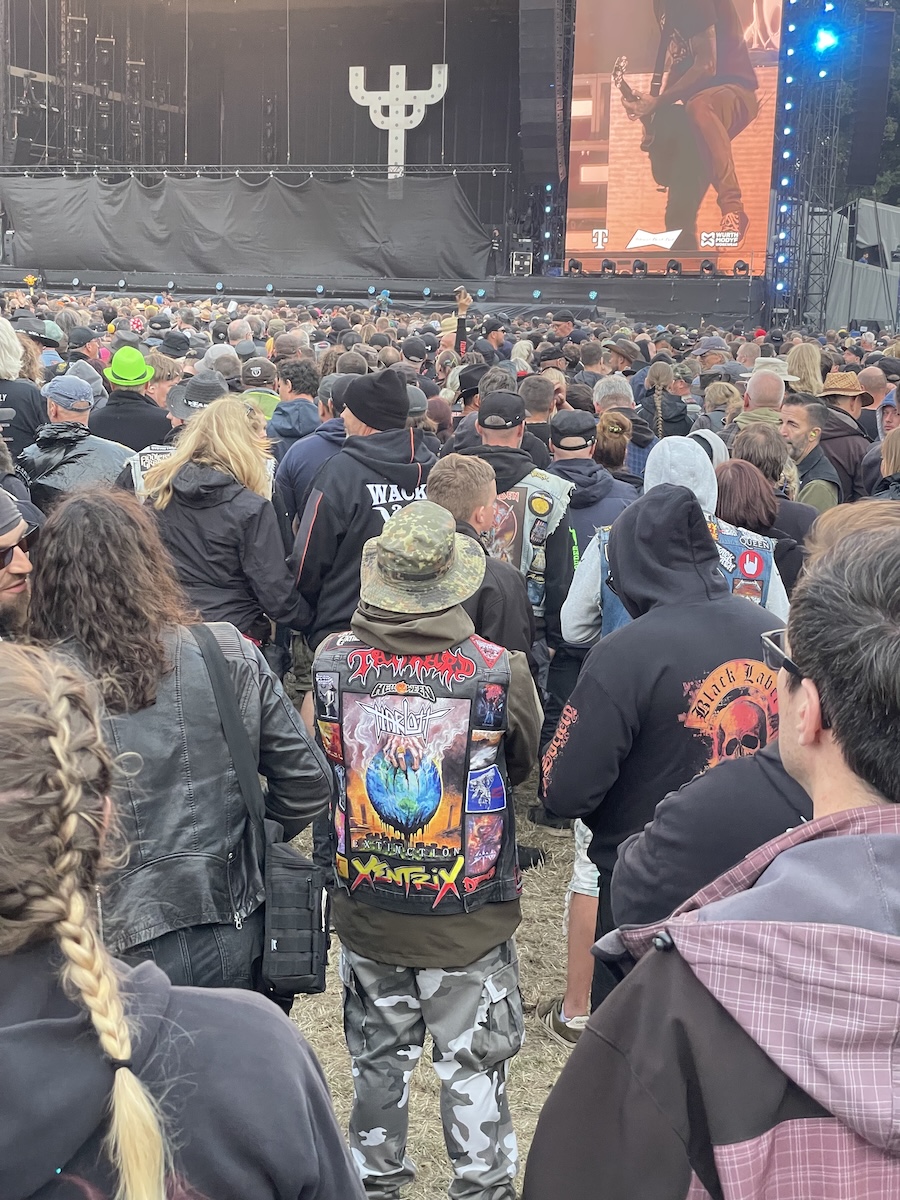
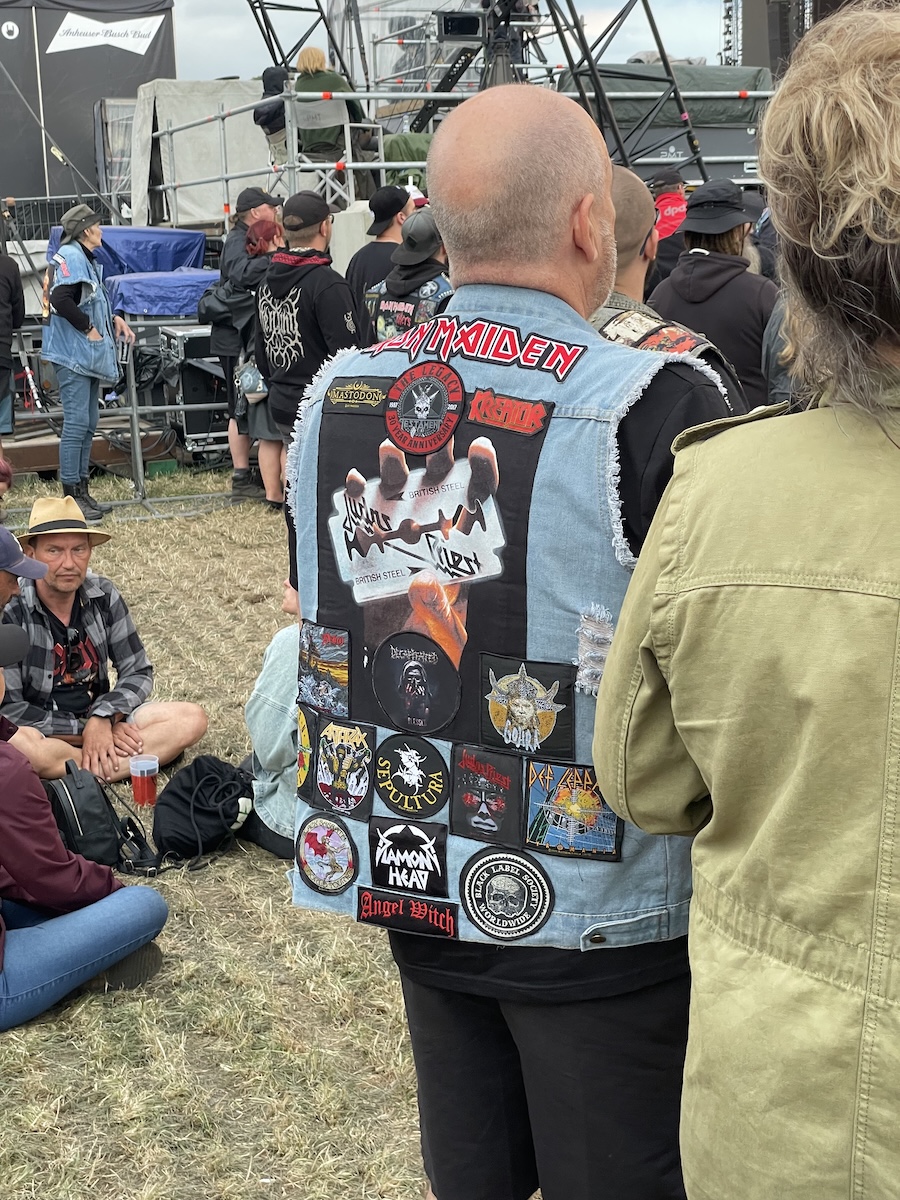
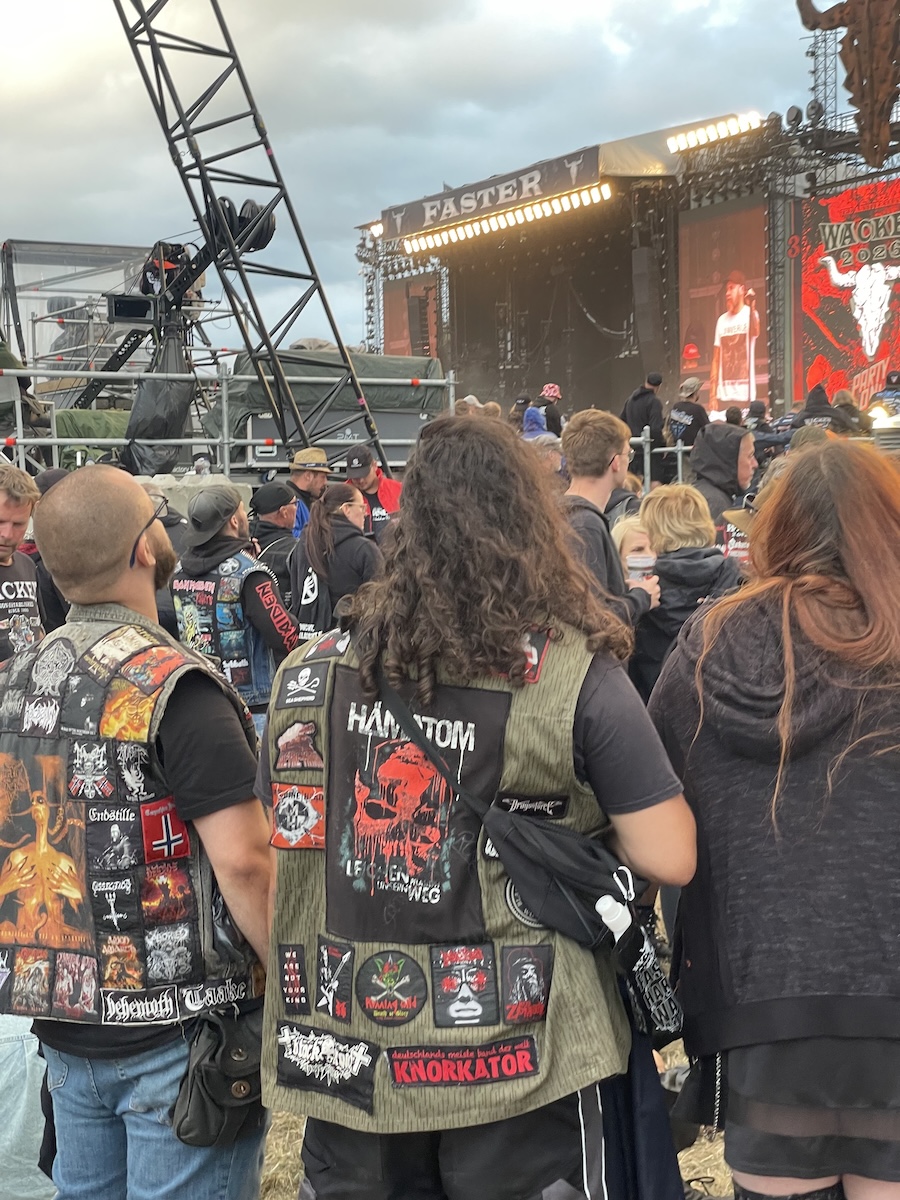
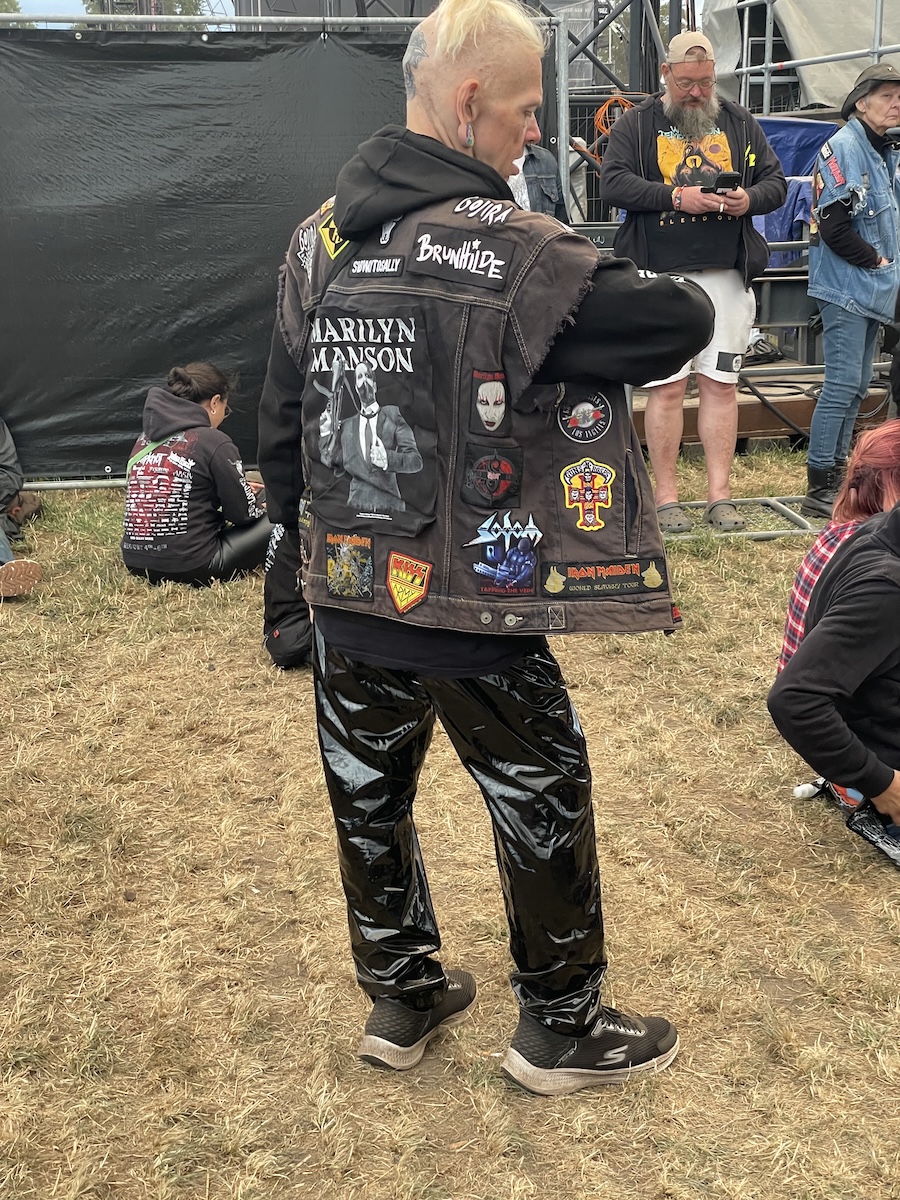
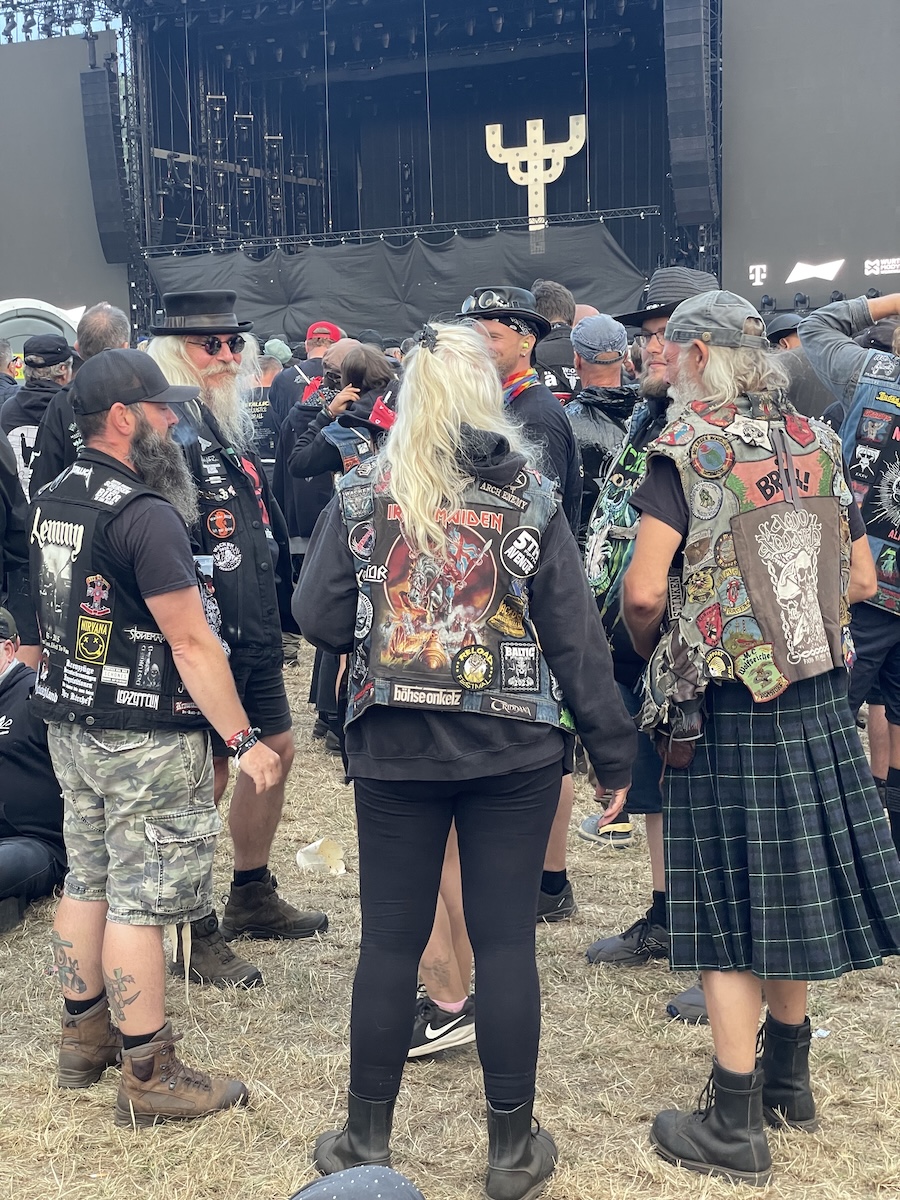
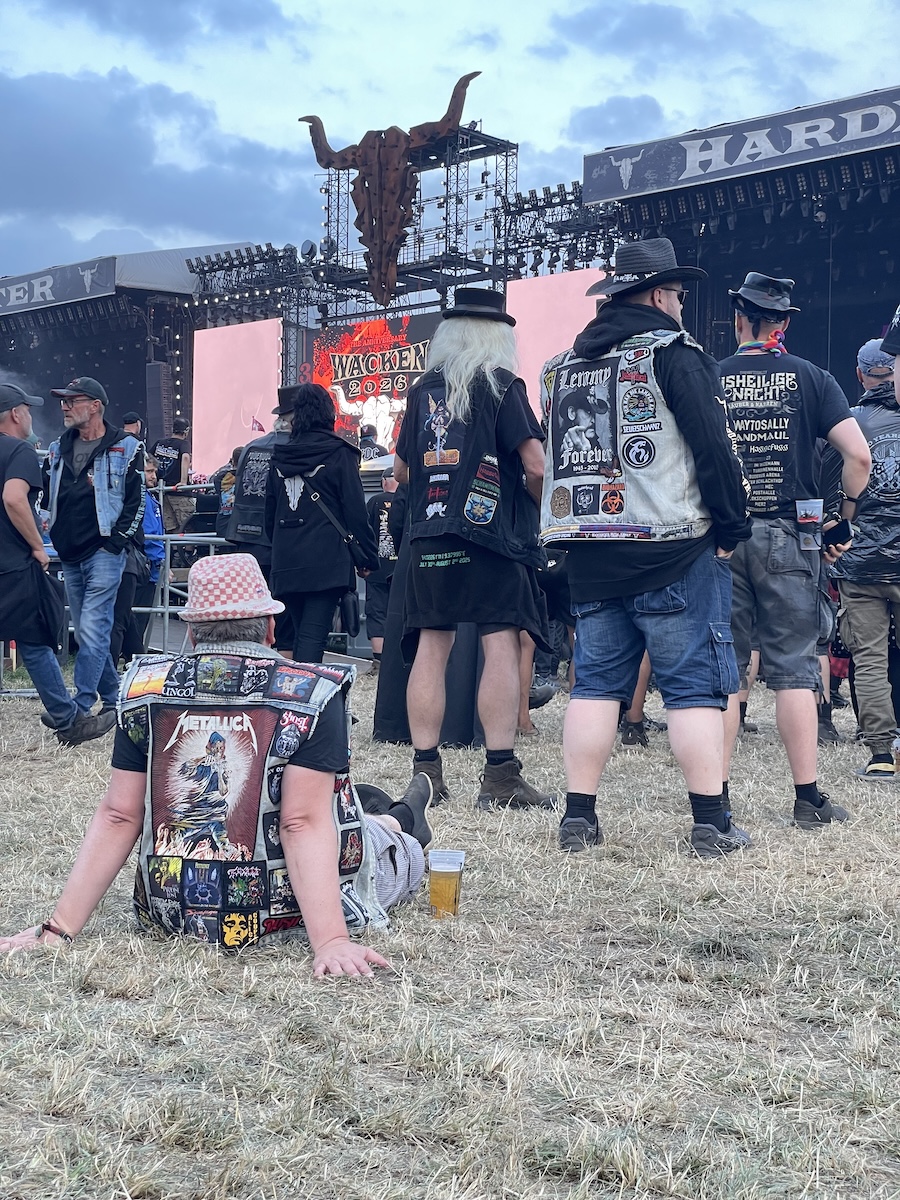
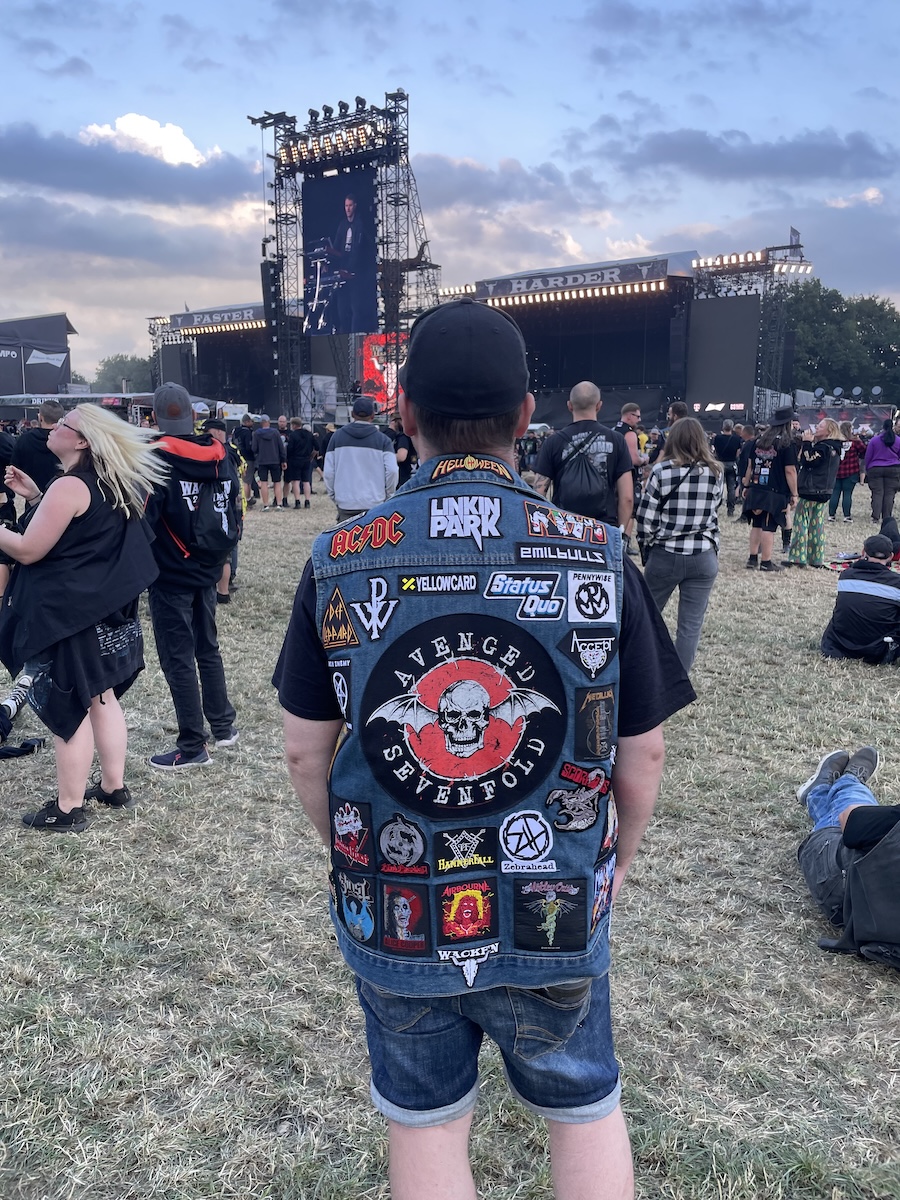
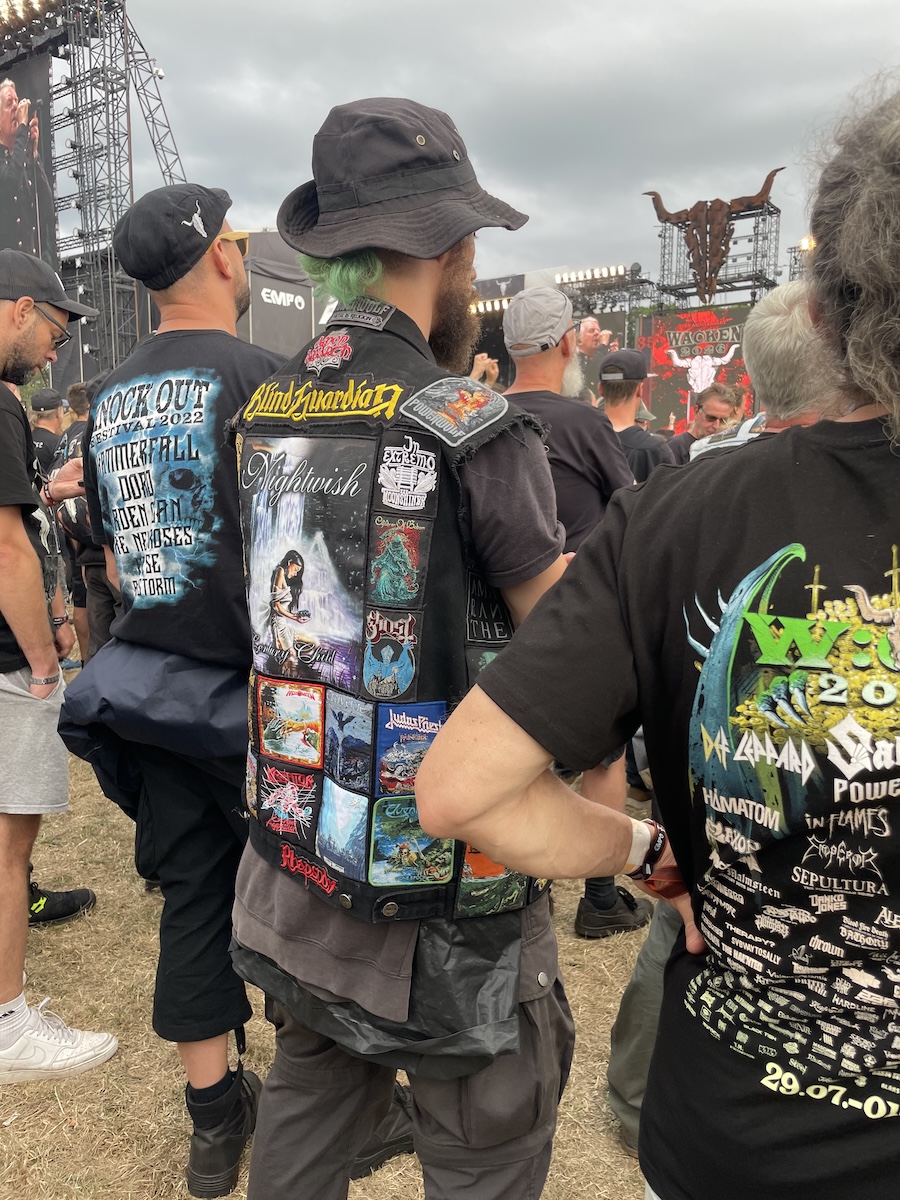
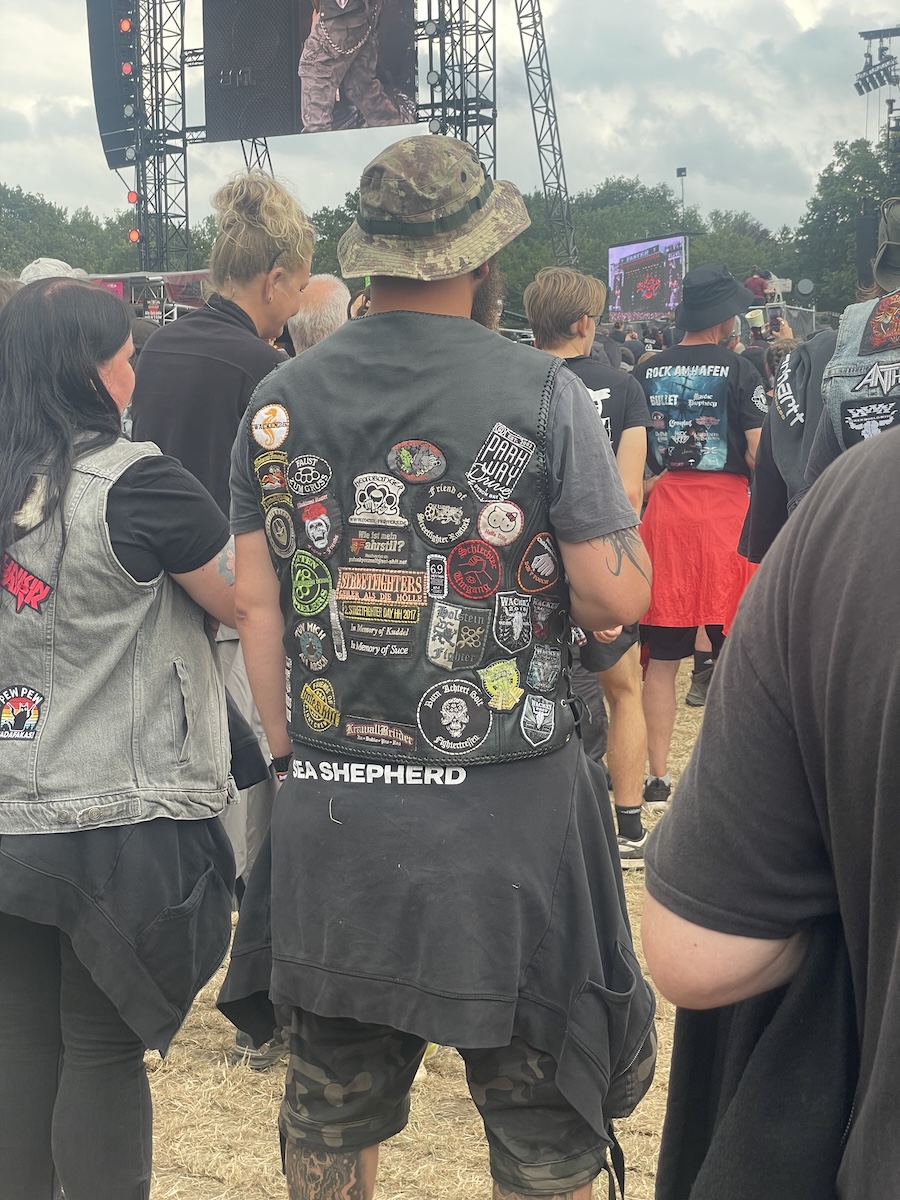
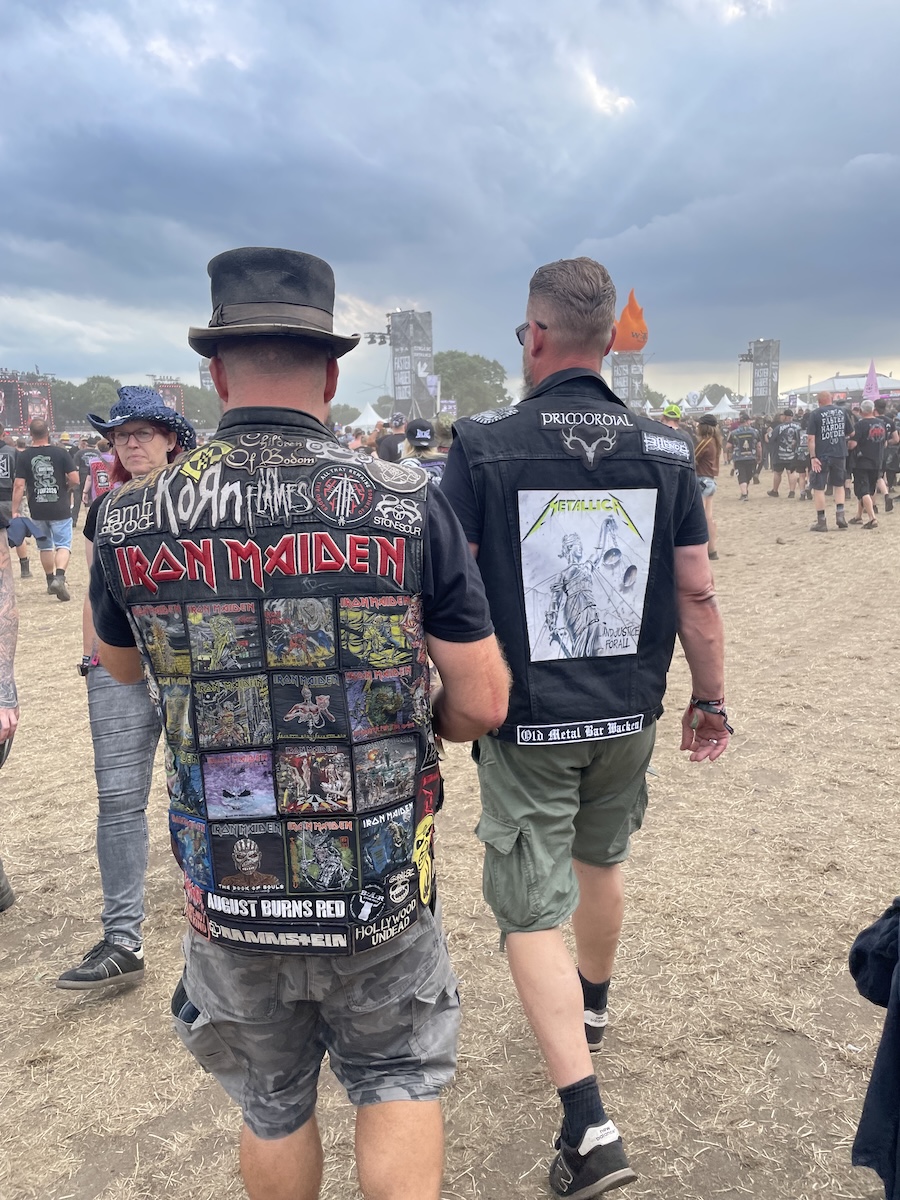
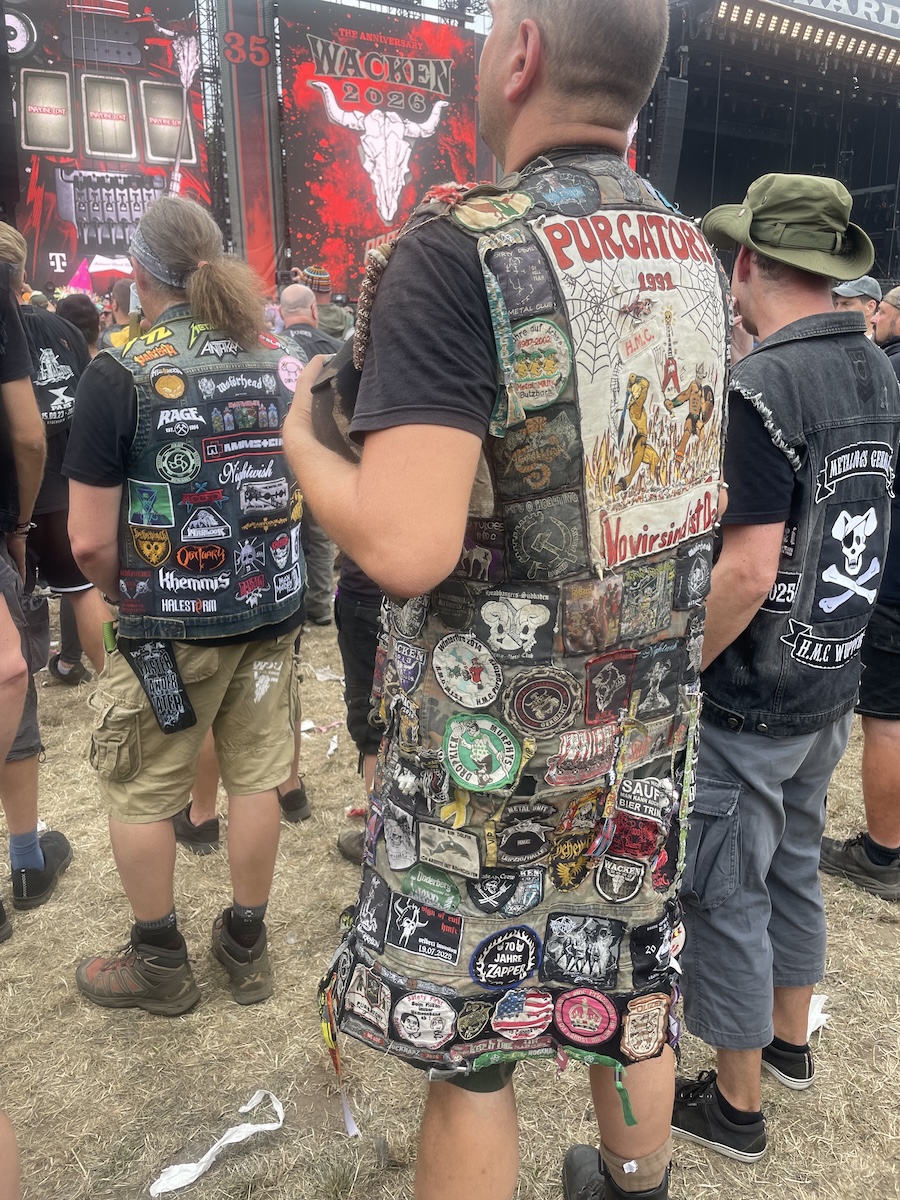
I got to like the music at this extraordinarily well-run festival. But I was completely taken with the battle jackets. So I took photos of them (see below).
The battle jackets are usually jeans jackets whose arms have been cut off (the German “Kutte” stems from “cut off”). These makeshift vests are colorful, artful, and painstakingly maintained, with patches sewn on whether iron-on or not. The patches also grace the jackets’ fronts. These I avoided photographing for obvious reasons.
Battle jackets are at once an in-group indicator and a vehicle for individual expression, with patches indicating the wearer’s tastes amid the crazy breadth of metal (death metal, black metal, nu metal, pirate metal, metalcore, death core (a death metal-hardcore combo), folk metal, country metal, Indian folk metal, Māori metal, Viking metal, electrometal, and more).
Patch choices are generational (lots of Trivium, In Flames, and Slipknot among the younger crowd; Iron Maiden, Judas Priest, and Black Sabbath with the gray-hairs, of which there were many).
Patches can be funny: “I fuck on the first date,” “Angry music makes me happy,” “Small penis club,” “People = Shit,” “Porno casting crew,” “Don’t follow me I’m lost too,” “I’m not gay but $20 is $20,” “Real men can lick a pussy,” “Bitte nicht schubsen, ich hab Bier in der Hand” (please don’t shove, I’ve got a beer in my hand), “Wo Saufen eine Ehre ist, kann Kotzen keine Schande sein?” (Where heavy drinking is an honor, surely vomiting can’t be a disgrace?).
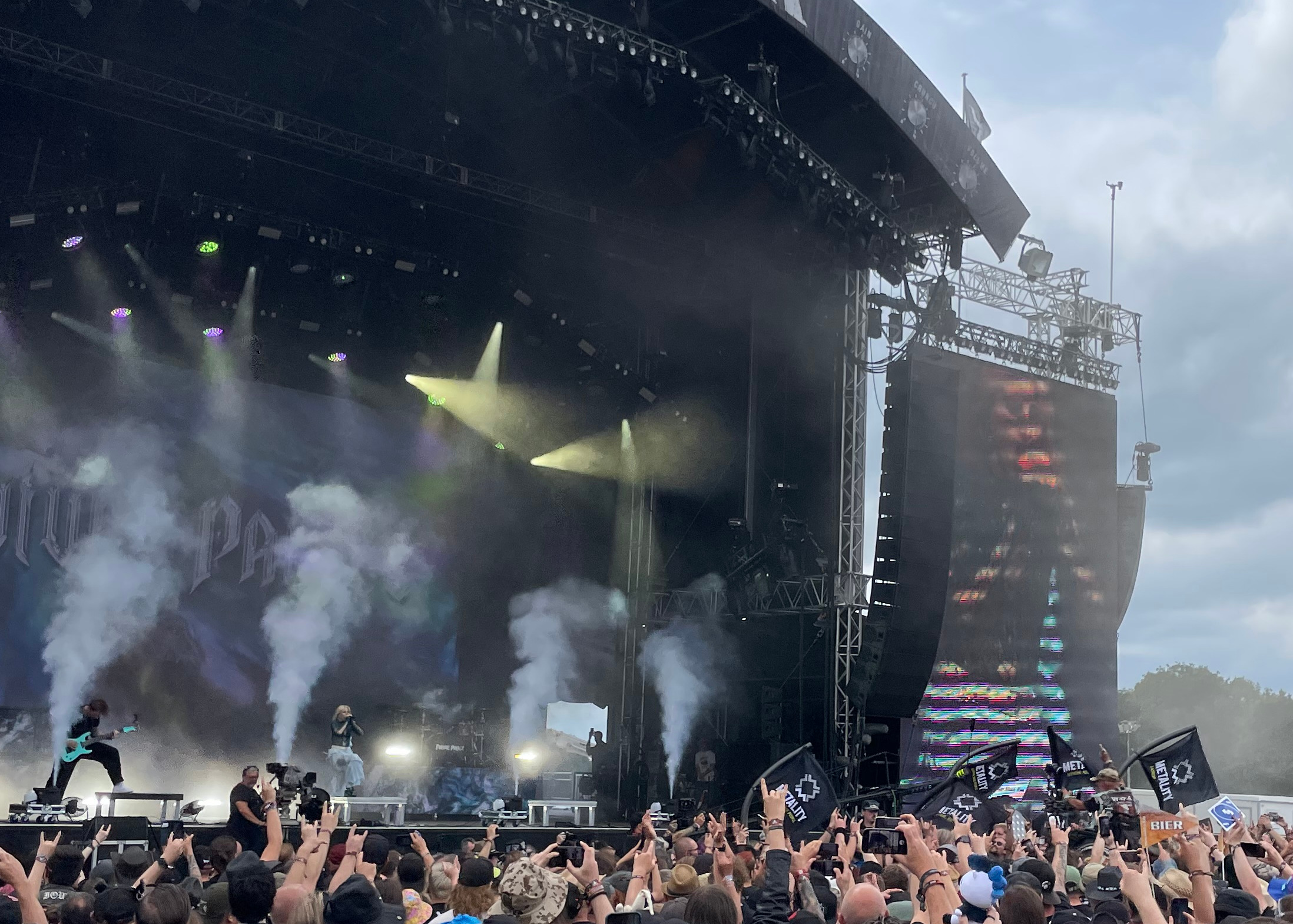
I learned a lot about metalheads, not only through their patches. They dress in black but are a rather enlightened, courteous, and polite bunch. If someone stumbles in a mosh pit, those surrounding the fallen metalhead stop moshing and pick their comrade up. I observed as a series of wheelchairs crowd-surfed toward the “Harder” stage as Future Palace rocked.
Metalheads seem to run liberal (“Kein tier is egal” (no animal is insignificant). They are anti-Neonazi and don’t like the far right in general: “Liberte, egalite, fckAfDe” (i.e, fuck the AfD, the far-right Germany party that’s making worrisome inroads, particularly in the eastern states).
They’re accepting of outsiders who, for example, wear light-blue T-shirts (ahem).
Really an amazing experience, one for which I’m deeply thankful.
With that, the Kutten of Wacken: